Brigade Cooking: Moving Away From the Stove



Before a chef ever sends a CV these days, the head chef has already looked them up. That is simply how it works now, whether we like it or not.
I remember a time when getting a job in a good kitchen meant knowing someone, or at least knowing someone who knew someone. You’d call ahead, ask if there was a stage going, turn up with your knives wrapped in a cloth, and either impress or embarrass yourself within the first service. Word got around slowly, through the old pub-after-shift networks and the quiet nods between chefs at supplier markets. Your reputation was built plate by plate, shift by shift, year by year.
That system still exists. But it now runs alongside something considerably faster, considerably louder, and considerably less forgiving. Social media has not replaced word of mouth in hospitality hiring. It has turbo-charged it, and given it a permanent, searchable memory.
When a CV lands in my inbox (or more likely my WhatsApp, because nobody does email anymore), the first thing I do is not read it. I open Instagram. Then LinkedIn, if the candidate looks senior enough. Then, if I am feeling thorough, I might do a quick Google and see what comes back. I would wager most hiring chefs and head chefs do the same, even if they wouldn’t freely admit it over service.
This is not idle nosiness. Chef reputation on social media now forms a genuine part of how kitchens assess a candidate before they’ve even shaken hands. What a cook posts, how they speak about food, whether they photograph their mise en place or photograph themselves pouting next to a blowtorch, these things tell you something. Not everything. But something.
A chef who shares a thoughtful photograph of a dish, notes the provenance of the main ingredient, and credits the supplier is signalling values. A chef who reposts viral food content and filters their face onto every story is signalling something rather different. Neither is a crime. But one of them is likely more compatible with the kitchen I run.
Hospitality is still, at its heart, a word-of-mouth industry. The best recommendations I have ever received came from a trusted former colleague saying, “That cook I had in my section last year, she’s looking. You want her.” That carries more weight than any LinkedIn profile, any number of Instagram followers, or any beautifully formatted PDF with a photograph of the candidate in chef whites smiling at a camera.
Word of mouth in hospitality hiring operates through a tight, surprisingly small network. The industry talks. Kitchen culture means that news of a good commis who can actually dice without being shown three times travels faster than you might expect. So does news of a sous chef who walked out mid-service, or a chef de partie who bullied the kitchen porters. People remember. People mention things, quietly, over a coffee at a trade event or a pint after a long Saturday.
Social media has not replaced this. It has given it additional infrastructure. The whisper network now has a semi-public feed attached to it.
The phrase “chef personal brand online” makes me wince slightly (I am constitutionally opposed to marketing language in kitchens), but there is no point pretending it is not a real thing. How chefs present themselves online now forms part of their professional identity. Here is what I, and chefs I respect, are actually noticing when we look someone up.
None of this requires a chef to have thousands of followers or a polished content strategy. It requires them to behave online roughly as they would in a decent kitchen: with respect, curiosity, and a bit of humility.
Kitchen culture and social media make uncomfortable bedfellows in some respects. The industry has a complicated past with its own internal culture, and social media has increasingly made that visible in ways the old guard never anticipated. Chefs who behaved badly have found themselves named, and kitchen environments that relied on intimidation have found that those environments do not stay private forever.
This is, on balance, probably a good thing. The romanticisation of brutality as a training method was always questionable. I learned under chefs who were demanding, precise, and occasionally terrifying, but the best of them were demanding because they had standards, not because they enjoyed it. That distinction matters.
But digital reputation cuts both ways. A chef who posts a defensive rant after a bad review, or who publicly humiliates a member of their brigade in a story, has handed potential employers a useful piece of information. The internet has no shortfall of chefs who have talked themselves out of jobs before their CV arrived.
To be direct about how chefs get hired today: it is almost never through a single channel. The process typically looks something like this.
Hospitality recruitment and reputation are now inseparable. The formal CV has not disappeared, but it has become one element in a broader picture that includes online presence, professional network, and the informal intelligence that circulates through the industry constantly. A strong CV attached to a troubled online presence will prompt questions. A minimal CV attached to quiet, consistent professionalism and excellent word of mouth will often prompt a trial.
If you are a cook thinking about your next move, or a young chef just starting to build your career, here is some straightforward guidance.
None of this is complicated. Most of it is simply being a decent professional in public. The fact that it now happens to be visible to future employers is a structural shift in hospitality recruitment, not a reason to perform a character you aren’t.
Yes, increasingly so. Most head chefs and kitchen managers will look a candidate up online before committing to a trial, let alone a contract. Social media does not replace a good trial service, but a poor online presence can prevent a candidate reaching that stage.
Absolutely not. Employers are not looking for influencers. They are looking for professionals who conduct themselves with consistency and seriousness. A small, quiet, principled presence is considerably more useful than a large but erratic one.
More relevant than ever, arguably. The industry’s informal networks have always been powerful. Social media has extended their reach and given them a searchable archive, but the personal recommendation from a trusted colleague still carries enormous weight in a hiring decision.
Public complaints about former employers or colleagues, defensive responses to criticism, anything that suggests a difficulty with authority or basic professionalism. The internet has a longer memory than most people anticipate, and the hospitality industry is smaller than it appears.
The kitchen has always been a world where reputation travels fast and the past tends to catch up with you. Social media has simply made that process more immediate, more visible, and considerably harder to escape. Build the reputation you actually want, behave accordingly both in service and online, and the right kitchens will find you. That has always been true. It is just a little more transparent now.
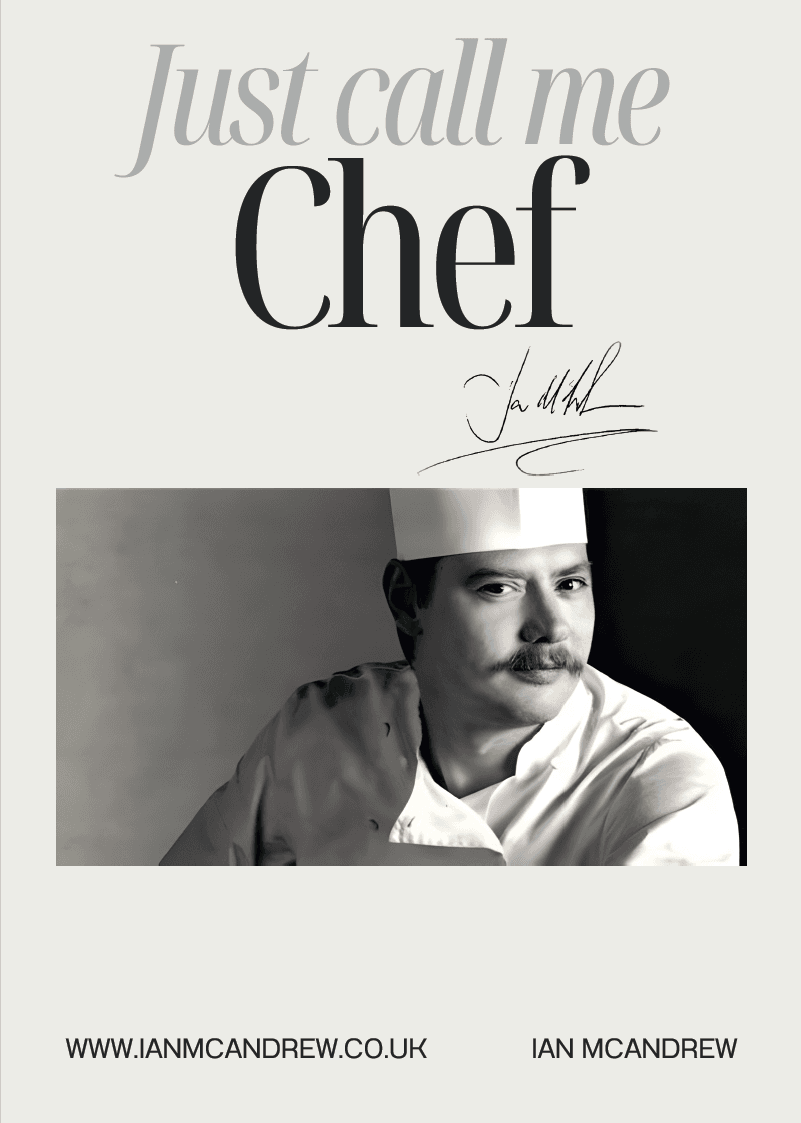
Chef Ian McAndrew’s specialist eBooks and guides are available directly on ChefYesChef, including his technical titles and autobiography. If you want more practical, chef-led reading beyond this article, you’ll find the full collection here.
Chef Ian McAndrew works with chefs, businesses, and individuals on a wide range of culinary projects, from concept development to practical problem-solving.
If you’d like to talk through an idea or need informed guidance, you’re welcome to contact him.
Essential cookies required for the site to function. Cannot be disabled.
Cookies that help us understand how visitors use the site.
Cookies used to deliver relevant advertisements.
Privacy Policy Terms of Service