
Prep Cook Skills: The Real Engine of Dinner Service
TL;DR: Prep cook skills, from uniform brunoise to properly clarified stock, determine what lands on the pass at service. Kitchens that treat prep as an afterthought pay for it by 8pm. The early shift is where dinner is actually made.
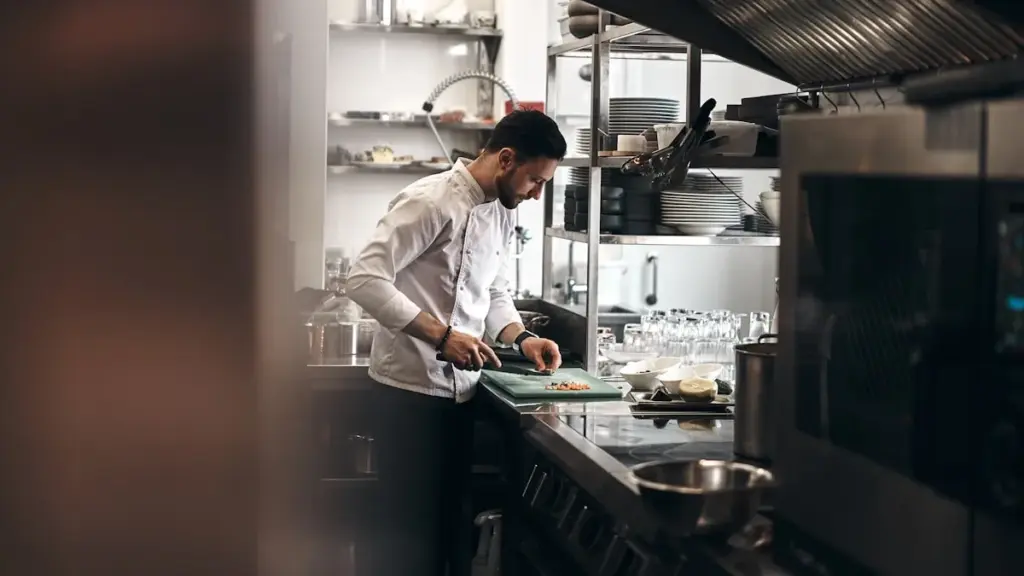
The prep cooks are already in when you arrive. They were probably there before you finished your coffee, before the delivery lorry had fully reversed onto the yard, before anyone with a toque and an opinion showed up to take the credit. And yet, without their prep cook skills, dinner service would collapse within the first twenty minutes.
I have worked with prep cooks who could turn a celeriac into something architectural in the time it took me to find my knife roll. I have also worked in kitchens where prep was treated as a punishment, handed off to whoever had annoyed the head chef that week. The difference between those two kitchens, in terms of what landed on the pass at eight in the evening, was not subtle.
What Prep Cook Skills Actually Look Like in Practice
There is a tendency in kitchens to treat prep work as the boring bit before the real cooking starts. That is a profoundly stupid way to look at it. Prep cook skills are the bedrock of every dish that goes out. The brunoise needs to be uniform because uneven pieces cook unevenly. The stock needs to be clarified properly because cloudy sauce undermines the whole plate. These are not decorative details.
A good prep cook reads a recipe sheet and thinks three moves ahead. They are working out what needs to go in the oven first, what can be prepped cold, what will oxidise if done too early. That is not instinct. It is trained, methodical intelligence, developed over thousands of repetitions in cold kitchens at half past six in the morning.
The knife skills alone take years to develop properly. Not just the speed, which is the thing people tend to notice, but the consistency. A prep cook who can produce five hundred identical slices of fennel without a mandoline is worth considerably more than one who relies entirely on gadgetry and luck.
Mise en Place: The Philosophy Behind the Prep
Mise en place is a French term that translates loosely as ‘everything in its place’. It refers to the practice of organising and preparing all ingredients and equipment before service begins. Every container labelled, every quantity weighed, every component ready to be assembled rather than created from scratch under pressure.
The concept sounds simple. In practice, building a solid mise en place for a hundred covers, across a menu that changes with the season, is a logistical exercise that would make a logistics coordinator wince. And it falls almost entirely on the prep team.
I once watched a sous chef dismantle an entire service mid-shift because the prep cook had not clarified which variety of apple had been used in a sauce reduction. The flavour profile was slightly off. Not inedible, but not right. That level of detail is exactly what good prep work demands, and exactly what goes unacknowledged when service runs smoothly.
Kitchen Preparation: The Hours Nobody Sees
Kitchen preparation begins long before the first reservation arrives. It begins with deliveries, which need checking against spec sheets. It continues through peeling, trimming, portioning, blanching, marinating, reducing and resting. By the time a chef de partie picks up a portion of duck breast at service, that piece of meat may have been trimmed, scored, seasoned and brought to temperature by someone who will go largely unmentioned in the evening’s success.
The physical toll of prep work is real. Standing on a concrete floor for four hours butchering lamb shoulders is not glamorous. It is cold, occasionally bloody, and it demands a level of physical endurance that the Instagram version of kitchen life does not tend to feature. I have enormous respect for it, partly because I spent several years doing it myself before anyone trusted me near a stove unsupervised.
What Good Prep Actually Protects Against
A well-prepared kitchen is a calm kitchen. When every component is where it should be, at the right temperature and in the right quantity, a chef can cook rather than scramble. When prep is poor or incomplete, service becomes reactive rather than controlled. Things get rushed. Sauces get overworked. Proteins get cooked from cold because there was no time to temper them. The results are predictable and not in a good way.
- Consistent portioning prevents waste and controls cost per cover.
- Properly stored prepped ingredients retain freshness and texture through service.
- Advance reduction and seasoning of stocks and sauces allows chefs to adjust rather than rebuild at service.
- Accurate labelling and dating prevents the kind of roulette that results in a bin full of Tuesday’s bisque being used on Thursday.
Why Prep Cooks Do Not Get Enough Credit
Part of the problem is structural. In the traditional brigade system, prep cooks sit at the bottom of a hierarchy designed by people who wanted to feel important at the top of it. That hierarchy has its uses, but it also creates a cultural blind spot where the most foundational work gets the least recognition.
The other part is visibility. Diners see the plate. Critics write about the chef. Nobody reviews the brunoise. Nobody sends a compliment to the kitchen about the perfectly tempered chocolate work that a prep cook spent forty minutes on at seven that morning. The rewards flow upward and the labour flows downward, which is a dynamic the industry has been slow to examine honestly.
Good head chefs know better. The ones I have worked under who ran genuinely excellent kitchens all shared one habit: they walked the prep section before service and said something specific and genuine. Not ‘well done team’, which means nothing. Something like ‘those Jerusalem artichokes are turned perfectly, that is going to matter tonight’. It costs nothing and it builds the kind of crew loyalty that no bonus structure can replicate.
What Home Cooks Can Learn From the Prep Kitchen
The principles of professional kitchen preparation translate directly to cooking at home, and they make the experience substantially less stressful. Most home cooking disasters happen because someone is simultaneously trying to prep and cook, which means attention is split at the moments it most needs to be focused.
Before you turn on a single burner, do the following. Read the recipe in full. Gather every ingredient. Weigh what needs weighing. Peel, chop and portion everything that can be prepped in advance. Bring proteins to room temperature. Have a cleared surface ready for plating. This is not fanaticism. This is just not making things harder than they need to be.
The difference between a home cook who produces consistently good food and one who produces occasionally brilliant but often chaotic meals usually comes down to this one discipline. Prep is not the less interesting part of cooking. It is the part that makes everything else possible.
Frequently Asked Questions
What is the difference between a prep cook and a line cook?
A prep cook works primarily before service, preparing ingredients and components so that line cooks can assemble and finish dishes during service. Line cooks work the stations during service itself, cooking to order. In smaller kitchens the roles overlap considerably, and many experienced line cooks started on prep and developed their foundational skills there.
How long does it take to develop strong prep cook skills?
It depends on the kitchen and the individual, but meaningful consistency in knife work, portioning and mise en place organisation typically develops over one to two years of daily practice. Speed follows accuracy, not the other way around. Rushing knife technique before the muscle memory is in place produces uneven cuts and the occasional trip to A&E.
Why is mise en place considered so important in professional kitchens?
Because service is fast and largely unforgiving. A chef who has to stop mid-cook to find a missing ingredient loses control of the dish and potentially the whole section. Mise en place removes those interruptions. It shifts the cognitive load to before service, when there is time to think, rather than during service, when there is not.
Can prep cook principles help in a home kitchen?
Absolutely. The core idea is to separate preparation from cooking so that each stage gets your full attention. Even for a simple weeknight meal, prepping all your ingredients before turning on the heat changes the experience entirely. You cook more calmly, make better decisions about seasoning and timing, and the food is generally better for it.
The next time a service runs well, and the kitchen stays quiet and controlled and the plates go out looking exactly as they should, ask yourself who was in that kitchen at six in the morning. The answer is almost never the person taking the bow at the end of the night.