Social Media & Chef Reputation: Hired Before a CV



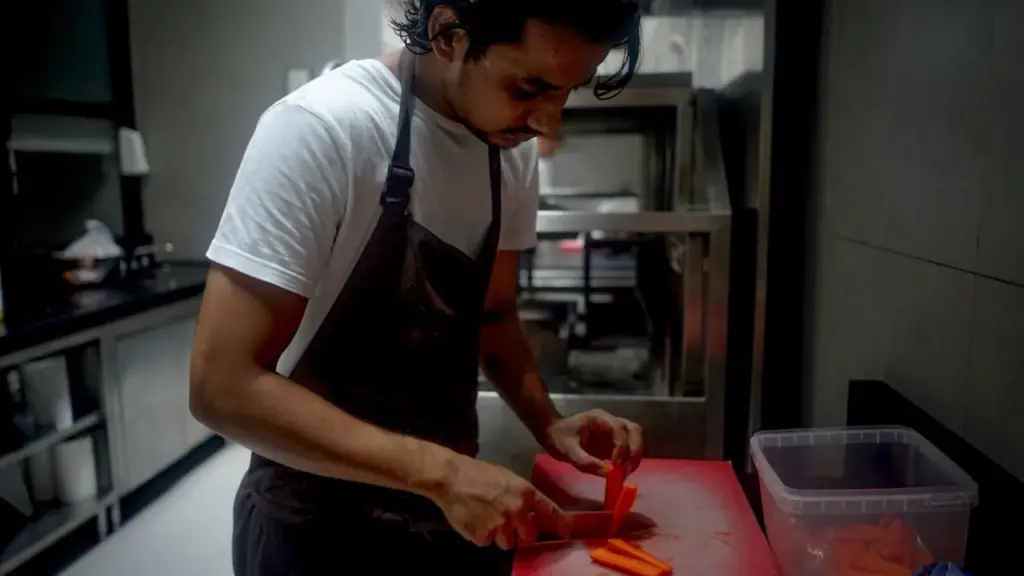
I once watched a young commis chef work a full Saturday service at a restaurant in London. Twelve hours, covering from noon to midnight, not a word of complaint. He plated beautifully, kept his section clean, and didn’t nick so much as a bread roll. On Monday, the head chef rang to say they’d decided to “go in a different direction”. The lad never saw a penny. That was fifteen years ago, and the practice hasn’t changed much since. If anything, it’s got worse.
Trial shifts. The great unspoken arrangement of British hospitality. Everyone knows about them. Everyone has either done one, run one, or silently benefited from the labour they provide. And yet the industry treats the whole thing like a slightly embarrassing relative at Christmas: present in the room, but nobody wants to address it directly.
In theory, a trial shift is a short, unpaid or minimally compensated working assessment. A candidate comes in, works alongside the team for a few hours, and both parties decide whether there’s a fit. That’s the theory. In practice, many establishments run trials that last an entire service, sometimes two, extracting real, productive labour from candidates who are too anxious about the job to say anything.
I’ve been on both sides of this. Early in my career, I did a trial at a kitchen in Edinburgh where I prepped vegetables for six hours before the chef even introduced himself. Six hours. I peeled approximately four hundred shallots and went home smelling like a French onion soup. I got the job, but I’ve always suspected that was more about the shallots than the cooking.
Later, when I was running my own kitchen, I used trials myself. And I’m not proud of every decision I made. Some were fair and structured. Others, if I’m honest, were longer than they needed to be because we were short-staffed and I told myself it was “part of the assessment”. It wasn’t always. Sometimes it was convenient wearing the costume of due diligence.
Here’s the bit that makes most employers suddenly very interested in their shoes. Under UK employment law, if someone performs work that is of genuine benefit to your business, they are likely entitled to at least the National Minimum Wage. The guidance from HMRC is fairly clear on this, even if the interpretation in practice remains murky. A short skills assessment is one thing. A full service where the candidate is actually covering a role? That’s work. Full stop.
The hospitality industry has operated in this grey area for decades, and it has done so largely because candidates are rarely in a position to push back. They want the job. They don’t want to start a relationship with a potential employer by quoting employment law at them. So they turn up, they work, and they hope for the best.
HMRC has issued guidance stating that unpaid trials are only lawful when the person is genuinely being assessed rather than providing productive labour. If they’re serving actual customers, washing real dishes, or cooking food that goes out to paying tables, the law is not ambiguous. Pay them.
Cost is the obvious answer, but it’s not the whole story. Part of it is culture. British hospitality has a long tradition of treating the kitchen as a place where you earn your stripes through suffering, and unpaid trials fit neatly into that narrative. “It’s how it’s always been done” is the kind of reasoning that has also given us boiled-to-oblivion sprouts and prawn cocktail as a fine dining starter, so perhaps we shouldn’t lean on it too heavily.
There’s also genuine uncertainty about how to assess a cook without seeing them in action. A CV tells you remarkably little. References are often cautious to the point of uselessness. And a twenty-minute practical assessment in isolation doesn’t show you how someone performs under pressure, how they communicate, or whether they’ll keep their station clean at the end of a long Saturday. The instinct to “see them in service” is understandable. The execution is where things go wrong.
If you’re an employer reading this, I’m not saying abandon trials entirely. I’m saying do them properly. Here’s what that looks like in practice.
The argument that “we’ve always done it this way” holds no water when the way you’ve always done it exploits people who can’t afford to push back. Most trial candidates are not wealthy. They’re between jobs, they’ve taken a day off somewhere, and they’ve paid for transport. Asking them to work for nothing is not a rite of passage. It’s just bad practice dressed up as tradition.
There’s a more practical argument here too, beyond the legal and moral ones. The best candidates know their worth. A truly skilled chef with options is not going to give you a free Saturday. They’ll take the offer from the place that treats them like an adult from day one. The people who will do anything to get through the door are often, though not always, the ones with fewer options. You may be filtering for compliance rather than talent.
British hospitality is in the middle of a genuine staffing crisis. Post-Brexit, post-pandemic, there are fewer experienced workers available and more competition for the good ones. Running extractive, unpaid trials is not a recruitment strategy; it’s a way of ensuring that the best people go somewhere else.
If you’re going for a trial shift, you are entitled to ask how long it will last, what it will involve, and whether you’ll be paid. These are not unreasonable questions. Any employer who reacts badly to you asking them is, candidly, telling you something important about what working there will be like. File that information accordingly.
You’re also entitled to leave if the goalposts shift. If you were told two hours and it’s now hour five, you can say so. Politely, professionally, but clearly. The power imbalance in these situations feels enormous, especially when you need the job. But your labour has value, and no amount of enthusiasm for the role changes that fundamental fact.
The young commis I mentioned at the start eventually got a job at a different place, one that paid him for his trial, gave him proper feedback, and went on to invest in his training for three years. He’s running his own kitchen now. The restaurant that used him for free on that Saturday closed two years later. There’s probably no cosmic justice in that sequence of events, but I’d be lying if I said I didn’t find it at least a little satisfying.
Treat people fairly and they’ll do good work. It’s not a complicated philosophy. It’s just one the industry keeps finding reasons to ignore.
Chef Ian McAndrew’s specialist eBooks and guides are available directly on ChefYesChef, including his technical titles and autobiography. If you want more practical, chef-led reading beyond this article, you’ll find the full collection here.
Chef Ian McAndrew works with chefs, businesses, and individuals on a wide range of culinary projects, from concept development to practical problem-solving.
If you’d like to talk through an idea or need informed guidance, you’re welcome to contact him.
Essential cookies required for the site to function. Cannot be disabled.
Cookies that help us understand how visitors use the site.
Cookies used to deliver relevant advertisements.
Privacy Policy Terms of Service