Menu Writing: Good Dish vs Workable Kitchen
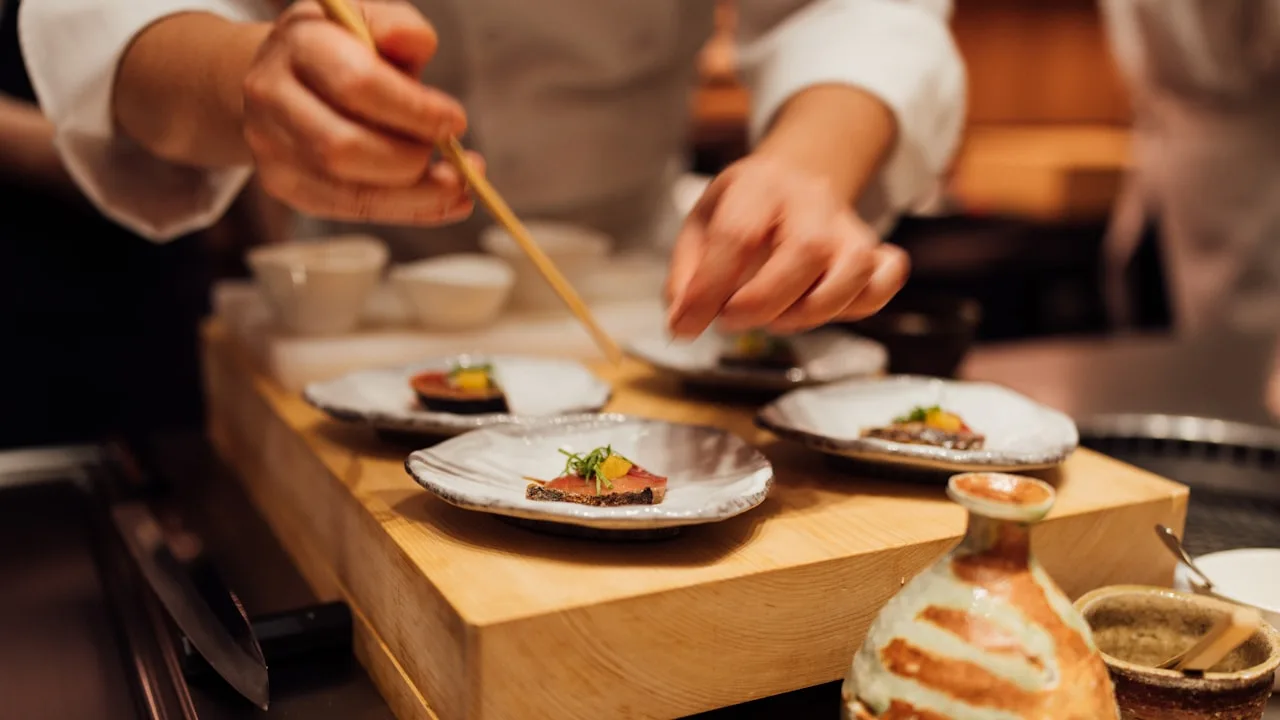



I once watched a chef spend forty-five minutes writing a menu in a notebook whilst sat at the pass during service. Actual service. Tickets coming in, pans on, and there he was, chewing a biro and trying to decide whether the amuse-bouche should involve a foam. It did not end well. For the menu, or the service, or the foam.
Menu writing is one of those things that looks easy from the outside. You eat at a good restaurant, the dishes sound lovely, and you think: well, someone just wrote down what they wanted to cook. Job done. But a menu is not a wish list. It is a working document. It has to survive contact with a real kitchen, real staff, real suppliers, and real customers who will order the worst possible combination of dishes at the worst possible moment.
The difference between a menu that reads beautifully and one that actually functions in a kitchen is, in my experience, the difference between a good idea and a workable plan. Both matter. But only one of them gets food on the table.
This sounds obvious. It is not obvious. I have seen menus written by chefs who clearly designed them on a good day, in a good mood, possibly after a glass of something. They look wonderful on paper. Six garnishes per plate. Three separate reductions. A dish that requires someone to stand at the stove doing nothing else for twenty minutes. At lunch. On a Saturday.
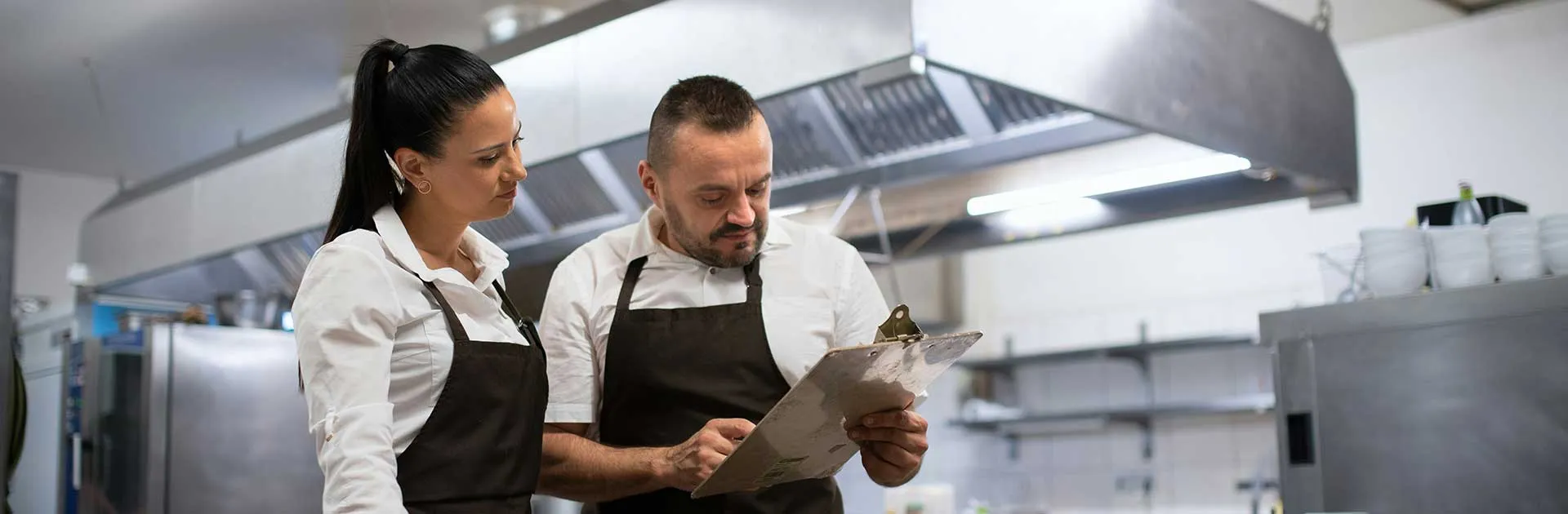
Before you write a single dish, you need to know your kitchen. How many burners? How many ovens? How many pairs of hands, and how skilled are they? A menu designed for a brigade of ten will break a team of three. This is not a failure of ambition. It is a failure of planning, which is worse.
At home, the same principle applies. Think about how many rings you have, whether your oven holds temperature properly (most domestic ovens run hot or cold; buy a thermometer and find out), and how much prep you can reasonably do in advance. A dinner party menu that requires you to be in the kitchen for the last forty minutes of the evening is not a menu. It is a punishment.
The best menus I have eaten from, and the best ones I have written, share something: restraint. Not timidity. Restraint. There is a difference. A timid menu is one where the chef has not committed to anything. A restrained menu is one where every dish is there for a reason, and nothing is there to fill space.
Pick your anchor dishes first. The things you can cook brilliantly, the things that excite you, the things that speak honestly to the season and your suppliers. Build outward from those. If the centrepiece is a slow-braised shoulder of Herdwick lamb with anchovy and rosemary, then everything around it should support that logic: a starter that is sharp and fresh, a pudding that is neither heavy nor sweet to the point of exhaustion.
What you want to avoid is a menu that reads like a greatest-hits compilation from six different restaurants. A Japanese-inspired starter, a French classical main, a pudding that seems to have wandered in from a gastropub. Customers can feel that lack of coherence, even if they cannot name it. It feels unsettled, and unsettled menus produce unsettled kitchens.
I get cross about this. Not quietly cross. Properly cross. A menu that ignores the season is a menu that ignores the point. A tomato in February is not a tomato. It is a red object with the texture of damp cardboard and the flavour of mild disappointment. Why would you put that on a plate?
Good seasonal cooking is not about being fashionable or writing “foraged” on the menu in italics. It is about using produce at its best, which means it will taste better, cost less, and require less interference from the chef. A perfect Jersey Royal with good butter and a little sea salt needs nothing else. That is not laziness. That is confidence.
Practical seasonality also means building supplier relationships. Know your greengrocer, your fishmonger, your butcher. Not as a romantic notion, but because they will tell you what is good this week, what came in this morning, and what you should not bother with. That knowledge is worth more than any trend piece about what ingredients are having a moment.
Here is where menu writing gets technical, and also where most home cooks and many professional ones go quietly wrong. A dish does not exist in isolation. It exists alongside every other dish on the menu, and all of them have to be cooked and plated at roughly the same time.
Think about these questions before the menu is finalised:
That last one sounds paranoid. It is not paranoid. It is Tuesday. Plan for it.
For home cooks, the equivalent question is simpler but just as important: which elements of this meal can I finish before my guests arrive, and which ones genuinely need last-minute attention? Ideally, at least two of your three courses should be mostly done before anyone rings the doorbell. You are a cook, not a performance artist.
If you are writing a menu for a restaurant, the words matter almost as much as the food. Not because customers need a novel with their starter, but because a well-written description sets expectation and reduces the number of times your front-of-house staff have to explain what something is.
Keep it honest and keep it short. List the main components clearly. Do not hide things. If there is anchovy in the dressing, say so. If the dish contains nuts or dairy, this is not optional information. And please, resist the urge to describe everything as “pan-roasted” or “hand-picked” or “lovingly prepared.” Lovingly prepared. I ask you.
The best dish descriptions I have read tell you what the dish is, what it tastes like in broad terms, and perhaps where the main ingredient comes from, if that is genuinely relevant. “Slow-roast Tamworth pork belly, braised Savoy cabbage, caraway and mustard sauce” is enough. “A celebration of heritage pork, tenderly coaxed over many hours” is, frankly, something else entirely.
This applies whether you are running a kitchen or cooking for eight people at Christmas. Cook the menu. All of it. Together, in sequence, at the pace you would actually be working. Not the dishes individually on separate afternoons when you are fresh and unhurried, but the whole thing as a service.
You will find things you missed. A sauce that needs attention at exactly the wrong moment. A garnish that wilts in thirty seconds. A pudding that takes longer to set than you thought. Better to find these things in a test run than at the actual table, with guests waiting and your confidence draining quietly into the floor.
A menu that works is one that has been thought about honestly, built around real ingredients and real skills, and tested against the reality of your kitchen rather than the ideal version of it in your head. The food on the plate is the end of a long chain of decisions, and the decisions that happen before anyone picks up a knife are the ones that determine whether the whole thing holds together.
Write for the kitchen you have. Cook what is good right now. Keep it tight, keep it honest, and for the love of all that is decent, boil your vegetables for the right amount of time. That is not a small thing. That is everything.
Chef Ian McAndrew’s specialist eBooks and guides are available directly on ChefYesChef, including his technical titles and autobiography. If you want more practical, chef-led reading beyond this article, you’ll find the full collection here.
Chef Ian McAndrew works with chefs, businesses, and individuals on a wide range of culinary projects, from concept development to practical problem-solving.
If you’d like to talk through an idea or need informed guidance, you’re welcome to contact him.
Essential cookies required for the site to function. Cannot be disabled.
Cookies that help us understand how visitors use the site.
Cookies used to deliver relevant advertisements.
Privacy Policy Terms of Service