
Chefs Studio Journal
Receiving Process: Cut Kitchen Waste at Delivery
TL;DR: A large share of avoidable food waste begins when deliveries arrive, before ingredients ever reach prep. Temperature checks, quality inspection, accurate paperwork, sensible storage and accountable receiving protect both produce and margin.
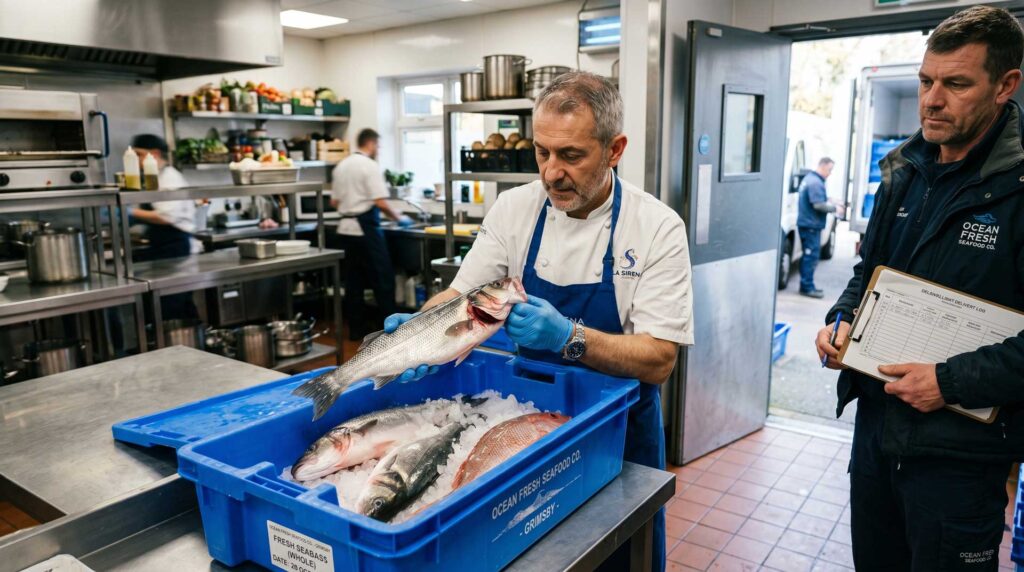
Getting produce from a farm gate to a restaurant pass without losing half of it to poor handling is one of the most unglamorous, most overlooked, and most important things a kitchen can do. Most waste happens not in the cooking, but in those first ten minutes when a delivery arrives and nobody is really paying attention.
I’ve worked in kitchens where the head chef never saw a delivery. The boxes came in, the commis signed for them, and three days later someone was wondering why the watercress smelt like a pond. Receiving procedures weren’t glamorous, so nobody bothered with them properly. It cost a fortune, and it cost the diners too, in quality they never quite received.
Why the Receiving Dock Is Where Kitchens Lose the Most Money
Food waste reduction starts at the back door, not at the bin. By the time a limp courgette reaches the prep section, the argument is already lost. Whatever happened between the farm and your kitchen, you are now working with a compromised ingredient, and no amount of technique will fully rescue it.
The receiving process, simply put, is the system by which a kitchen accepts, checks, records, and stores incoming deliveries. It sounds administrative. It is a little. But it is also the single greatest point of control a kitchen has over the quality of what eventually reaches the plate. A well-run receiving process is the difference between a kitchen that hums and one that haemorrhages produce into the bin every week.
Inventory control, which is the practice of tracking what you have, what you need, and what you are losing, is impossible without solid receiving. You cannot manage stock you haven’t properly logged. And you certainly cannot reduce food waste if you don’t know where it’s disappearing.
The Common Mistakes That Quietly Ruin Produce
Let me be honest: most of the receiving disasters I’ve witnessed wasn’t dramatic. Nobody dropped a crate of heritage tomatoes off a lorry. The failures were quieter. Fish left in a warm corridor while the chef finished a phone call. Soft herbs sitting in a cardboard box for forty minutes before anyone thought to check the temperature. These small failures accumulate, and they add up to a meaningful, measurable loss.
- Accepting deliveries without checking temperatures (especially for fish, meat, and dairy).
- Signing off on quantities without physically counting or weighing.
- Not comparing delivery notes against what was actually ordered.
- Storing new stock in front of older stock rather than rotating properly.
- Leaving produce in packaging that traps ethylene gas or moisture.
- Failing to note the condition of goods at the point of delivery, so there’s no record if something spoils within hours.
Every one of those habits is fixable. None of them require expensive kit or complicated software. They require discipline and a clear process.
Building a Receiving Process That Actually Works
The following steps work whether you’re running a small restaurant kitchen or managing deliveries for a larger operation. They also translate surprisingly well to a serious home cook who orders from farm boxes or visits a market regularly. The principle is the same: know what you’re accepting, and look after it immediately.
- Have someone responsible present for every delivery. This doesn’t mean the head chef has to drop everything every morning, but it must be someone who knows what they’re looking at. A commis who has never broken down a fish box shouldn’t be accepting a delivery of whole turbot unsupervised.
- Check temperatures before accepting cold goods. Fresh fish should arrive at or below 2°C. Poultry and meat, similarly. If it’s warm, reject it or, at minimum, document the temperature and notify the supplier immediately. This protects you legally as well as practically.
- Inspect quality visually and by smell. Eyes and nose are the most reliable instruments in a kitchen. Dull eyes on fish, slime on leaves, or any off smell at all: reject the goods or negotiate a credit. Don’t be polite about this. Politeness here costs money.
- Cross-check delivery against the order and the delivery note. Count. Weigh if necessary. A box labelled 5kg of lamb mince that actually contains 4.2kg is not a small discrepancy across a week’s worth of deliveries.
- Record everything at the point of receipt. Condition, weight, temperature, any anomalies. This feeds directly into inventory control and gives you the data to challenge suppliers or spot patterns in spoilage.
- Store immediately, in the right conditions, with stock rotation. New stock goes behind old stock. Always. No exceptions. It’s one of those rules that sounds obvious until you watch someone stack fresh crates on top of yesterday’s delivery because it’s faster.
- Communicate with your suppliers. If something consistently arrives in poor condition, say so. Good suppliers want to know. The farms and producers worth working with will take it seriously. Those who don’t, well, that’s useful information too.
Seasonality, Provenance, and the Value of Knowing Your Suppliers
Here’s something that makes the whole receiving process easier: buying seasonally from suppliers you actually know. When you’ve visited the farm, spoken to the grower, or at least had a proper conversation about how something was harvested and transported, you understand what you’re receiving. You know that the leeks come muddy but fresh, that the mushrooms need to breathe and shouldn’t be sealed in plastic, that the early-season asparagus is delicate and won’t forgive a warm morning in a corridor.
This knowledge doesn’t come from a spreadsheet. It comes from relationship and curiosity. It’s also, frankly, what makes cooking interesting rather than just transactional. A box of anonymous produce from a cash-and-carry is harder to care about than a crate of beetroot from a grower who told you how they were grown. I’m not being romantic about it; I’m being practical. Care and attention follow familiarity.
Inventory Control as a Tool for Waste Reduction
Inventory control isn’t about clipboards and bureaucracy, though a clipboard is not the worst thing in a kitchen. It’s about knowing what you have so you can use it before it goes. A simple daily or twice-daily walk of your cold rooms and dry stores, with eyes open and a working knowledge of what’s ageing, will do more for food waste reduction than any app.
The practical side of this is menu flexibility. A kitchen with good inventory awareness can shift a special, use up the last of something beautiful, or brief the floor team on what to push tonight. This is how great kitchens have always worked. Not with rigid menus and wasted produce, but with responsiveness. The receiving process feeds directly into this; the data collected at delivery becomes the foundation of sensible, waste-conscious planning.
Frequently Asked Questions
What temperature should deliveries arrive at?
Use the limits in your food-safety plan and the supplier’s product specification rather than one universal figure for every ingredient. In England, Wales and Northern Ireland, food that requires chilled control generally must be kept at 8°C or below, while the Food Standards Agency recommends operating fridges at 5°C or below. Check representative products with a clean probe where appropriate, record exceptions, and reject or quarantine deliveries that fall outside your agreed specification.
How do I reduce food waste through better receiving procedures?
The single most effective change is to inspect everything at the point of delivery rather than trusting that it’s fine and checking later. ‘Condition recorded at receipt’ means you can reject or negotiate credits in real time. Proper storage immediately after delivery extends shelf life significantly. And accurate logging gives you the data to spot patterns, reduce over-ordering, and plan menus around what you actually have.
Does this apply to home cooks too?
Absolutely, in the same spirit if not the same scale. When your farm box arrives, don’t leave it on the doorstep for three hours. Check what’s in it, use what’s most perishable first, and store everything properly rather than just stacking it in the fridge. A bit of attention at the moment of delivery will see you throwing away far less by the end of the week.
What’s the role of inventory control in a small kitchen?
In a small kitchen, inventory control is often informal but no less important. A daily visual check of what’s in the cold room, combined with honest communication between the chef and kitchen team about what needs using, is enough to keep waste manageable. The key is consistency. Doing it once a week won’t work; doing it every service will.
The boring truth is that a kitchen’s reputation is built long before the cooking starts. It’s built in the choices made at the point of ordering, the attention paid at the point of receiving, and the habits formed around storage and rotation. None of it is glamorous. All of it matters.
If you get the receiving right, the cooking becomes a pleasure rather than a rescue operation. And frankly, there are enough things in a kitchen that can go wrong without starting fifty metres before you even reach the stove.