
Kitchen Learning Psychology: Why Stress Kills Skill
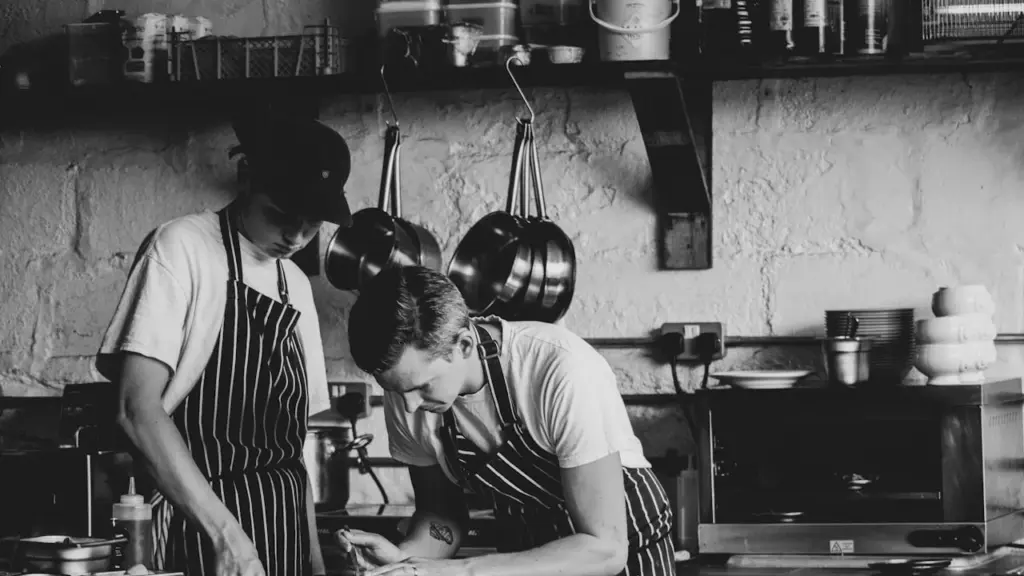
TL;DR: Kitchen learning psychology shows that stress blocks long-term memory storage. Shouting during service does not build skill, it builds cortisol. Hospitality teams retain more when instruction happens outside high-pressure moments.
Kitchen learning psychology is broken in most brigades, and the proof is standing right in front of you every time you watch a chef repeat the same mistake for the third week running. Traditional instruction in professional kitchens has not changed much since Escoffier was shouting at people in frock coats, and neuroscience suggests that is a significant problem.
I will be honest: I spent years doing it wrong. Not maliciously, but with the confidence of someone who had learned under chefs who also did it wrong, and so the cycle kept turning. You show someone a technique once, loudly, under pressure, at the worst possible moment during a Friday service, and then you wonder why they cannot replicate it on Tuesday when it actually matters. I genuinely believed repetition plus stress equalled retention. It does not. It just equals stress.
Kitchen Learning Psychology: Why the Old Ways Do Not Work
The traditional top-down model in hospitality kitchens runs something like this: a senior chef demonstrates, a junior chef watches once while simultaneously sweating through service, and is then expected to perform the task independently. Any failure is treated as a character flaw rather than a predictable consequence of how human brains actually take in new information.
The issue is cortisol. When we are under stress, the brain shifts resources toward immediate survival rather than long-term storage. A commis chef being screamed at during a busy pass is not processing and filing that new information about knife angles or sauce reduction. Their body is flooding with stress hormones designed, evolutionarily speaking, for running away from something large and dangerous. The kitchen, from a neurological standpoint, looks quite similar.
There is a term for the state in which learning actually sticks: ‘desirable difficulty’. It was developed by cognitive psychologist Robert Bjork and describes the sweet spot where a task is challenging enough to require effort, but not so overwhelming that the brain shuts down the encoding process entirely. Most professional kitchens do not operate anywhere near that sweet spot. They operate at the other end, somewhere past ‘challenging’ and deep into ‘survival mode’.
What Neuroscience Actually Tells Us About Skill Retention
The hippocampus, the part of the brain responsible for converting short-term experience into long-term memory, functions poorly under sustained stress. Research from the University of California on stress and memory encoding has shown that acute stress before or during learning can impair the hippocampus’s ability to consolidate new information. Which means the classic ‘learn it during service or not at all’ approach is almost perfectly designed to make learning fail.
Sleep is also doing more than most chefs give it credit for. During sleep, the brain replays and consolidates motor skills learned during the day. A commis who practices brunoise on a quiet Tuesday afternoon, goes home, sleeps properly, and then repeats the exercise the following morning will outperform one who was drilled under pressure all week. The evidence on this is not ambiguous. Split-brain consolidation during REM sleep is well-documented, even if it does not come up much in brigade meetings.
Spacing also matters considerably. Massed practice, where you drill something repeatedly in a single session, produces weaker retention than spaced practice, where you return to the same skill across several shorter sessions over multiple days. This is not intuitive. It feels like massed practice should work better because the skill is fresh and you feel like you are improving quickly. That feeling is largely an illusion. The gains are shallow and fade fast.
Hospitality Staff Training Methods That Actually Help
None of this requires a training budget or a whiteboard covered in diagrams. It requires a different set of habits from those leading the kitchen. Here is what the evidence, and frankly a few decades of watching things go wrong, suggests actually works.
- Teach outside service hours wherever possible. Twenty minutes of focused practice in a calm kitchen before the brigade arrives beats ninety seconds of frantic demonstration during the 6pm rush. The brain is not in flight mode. It can actually receive information.
- Use spaced repetition deliberately. Return to a technique on day one, day three, and day seven. Ask the cook to demonstrate it back to you, not so you can judge them, but so retrieval practice forces deeper encoding. Being asked to recall something strengthens the memory trace far more than passively watching again.
- Give feedback that is specific rather than binary. ‘That is wrong’ teaches nothing. ‘Your knife angle is collapsing on the second stroke and that is why the cut is uneven’ gives the brain something to work with. Specificity creates a mental model. Vague criticism just creates anxiety.
- Allow mistakes to be made in low-stakes settings before service. If a cook has never had the freedom to do something incorrectly and understand why it went wrong, they have never actually learned it. They have only performed it while being watched.
- Acknowledge that fatigue is not a performance problem. It is a physiological one. A chef who has worked a double and is running on four hours of sleep is not going to consolidate a new skill effectively. Pushing harder in that state does not accelerate development. It just exhausts people.
Chef Team Development and the Problem With Fear as a Motivator
Fear produces compliance. It does not produce skill. There is a distinction there that a lot of kitchens have never quite grasped. A team that is frightened will follow instructions to the letter when being watched and improvise badly the moment they are not. A team that understands the reasoning behind a technique will apply it correctly in situations they have never encountered before, because they actually know what they are trying to achieve.
Chef team development that works long-term is built on psychological safety, which sounds like the sort of phrase that belongs in a corporate HR document but is in practice just the difference between a kitchen where people ask questions and one where they do not. When a cook is afraid to say ‘I do not understand’, they will fake it instead. And faking it in a kitchen produces food that is inconsistent at best and dangerous at worst.
I ran a kitchen for years where the culture was, let us say, robust. I thought the pressure produced excellence. What it actually produced was a very high turnover, a lot of suppressed confusion, and junior chefs who were very good at looking busy while not actually knowing what they were doing. The turning point was the moment a commis quietly asked me why we rested meat before slicing, and I realised she had been working with me for eight months and had never felt safe enough to ask before. That question embarrassed me more than any review ever had.
Practical Shifts Worth Making
Changing the culture of learning in a kitchen does not require a wholesale restructure. It requires a few consistent habits applied by whoever is running the brigade. The most useful ones are also the simplest.
- Brief the team on the ‘why’ behind techniques, not just the method. Understanding builds retention. Instruction alone builds compliance.
- Create a short window each week, even fifteen minutes, for deliberate skill practice outside service. Treat it as seriously as prep.
- When correcting someone, do it once, clearly, and then move on. Repeated public correction teaches shame, not skill.
- Ask cooks to explain techniques back to you in their own words. If they cannot explain it, they have not fully learned it, and no amount of silent nodding changes that.
The kitchen will always be a high-pressure environment. That is not going to change and, truthfully, some of that pressure is part of what makes it worth doing. But pressure does not have to mean chaos, and high standards do not have to mean learning by humiliation. The best cooks I have worked with became good not because someone shouted at them until the skill appeared, but because someone actually took the time to teach them and then trusted them enough to let them fail safely until it stuck.
Frequently Asked Questions
Why do high-pressure kitchens make learning harder?
Sustained stress triggers the release of cortisol, which impairs the hippocampus, the part of the brain that converts new experiences into long-term memory. When someone is under acute pressure, the brain prioritises immediate response over learning and retention. This is why skills taught during busy service rarely stick as well as those practised in calmer conditions.
What is ‘desirable difficulty’ and how does it apply to kitchen training?
‘Desirable difficulty’ describes a level of challenge that requires genuine mental effort without triggering the stress response that shuts down learning. In a kitchen context, it means giving a cook a task that stretches them slightly beyond their current ability, in a controlled setting, with time to think and make mistakes. That produces far stronger skill retention than throwing someone into service and hoping for the best.
How often should skills be revisited to improve retention?
Spaced repetition, returning to a skill on day one, day three, and then again at the end of the week, produces stronger retention than drilling the same technique repeatedly in a single session. The brain consolidates memory better when it has to retrieve information after a gap. Each act of retrieval strengthens the neural pathway, which is why asking a cook to demonstrate a skill without watching you first is more effective than another demonstration.
Does psychological safety actually matter in a professional kitchen?
Yes, practically rather than theoretically. A cook who feels safe enough to ask questions will surface misunderstandings before they become service problems. One who is frightened will nod, guess, and produce inconsistent results. Psychological safety is not about removing standards or tolerating poor work. It is about making it possible for people to learn honestly rather than perform competence they do not yet have.