
Chef Interview Questions That Actually Work
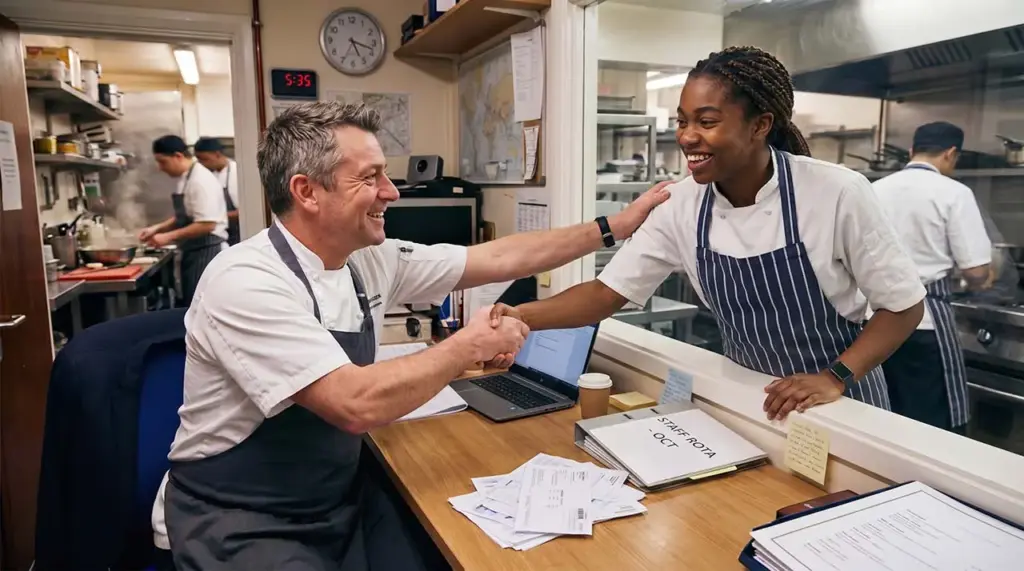
TL;DR: Bad chef interview questions let confident talkers sail through while skilled cooks get overlooked. Structured hiring interviews fix this by asking every candidate the same questions and scoring answers consistently.
Getting the right person into a kitchen role is harder than it looks, and bad chef interview questions are a big part of why so many hirings go wrong. Ask the wrong things and you end up with someone who talks a brilliant game but falls to pieces on a busy Saturday service.
I’ve sat on both sides of the table. I’ve been hired, I’ve hired, and I’ve watched other chefs hire people who were clearly going to be a disaster before they’d even started their mise en place. The pattern is almost always the same: the interview was a chat, not a structure. Someone asked about passion for food, got a glowing answer, and took it as gospel.
Passion is everywhere. Competence is rarer. The interview is where you find out which one you’ve actually got in front of you.
Why structured hiring interviews matter in kitchen recruitment
Kitchens are still one of the few professional environments where hiring is done largely on instinct, reputation, and a quick knife skills test. None of those things are useless. But none of them are sufficient either.
Structured hiring interviews exist precisely because human beings are terrible at trusting their gut. We hire people who remind us of ourselves. We over-weight confidence. We under-weight the quiet, methodical cook who doesn’t perform well in conversation but can break down a whole animal in forty minutes without being asked twice.
A structured interview means asking every candidate the same questions, in the same order, and scoring the answers against consistent criteria before you make a decision. It sounds bureaucratic. In practice, it just means you’re comparing like with like.
It also means you can justify your hiring decision, which matters more than people think. If you’ve got two equally qualified candidates and you pick one over the other, you should be able to say why in concrete terms. ‘They seemed like a better fit’ is not a reason. It’s a reflex.
Chef interview questions that actually tell you something
The questions below aren’t designed to catch anyone out. They’re designed to give candidates room to show you what they actually know, how they actually think, and how they actually behave under pressure. The distinction between what someone says they’d do and what they’ve demonstrably done is where most interviews fall short.
About technique and knowledge
- Tell me about a dish you’ve cooked recently where the technique mattered most. Walk me through exactly what you did and why.
- What’s your approach to seasoning during cooking, not just at the end?
- How do you decide when something is actually ready, rather than just checking a clock?
- What’s a method you’ve had to unlearn, and what replaced it?
That last one is genuinely useful. Anyone who says they’ve never had to unlearn anything is either very new or not paying attention. The cooks who grow are the ones who can identify where they went wrong and correct it without making a drama of it.
About pressure and pace
- Describe a service where something went wrong midway through. What happened, what did you do, and what would you do differently now?
- How do you manage your station when the pass is backing up and you’re behind?
- Tell me about a time you disagreed with a decision a senior chef made. How did you handle it?
Question three on that list is the one that separates the thoughtful cooks from the ones who’ll either roll over completely or blow up at the wrong moment. You want someone who can flag a problem calmly and then get on with it. What you don’t want is someone who either nods along and quietly resents everything, or who makes the middle of service the moment for a philosophical debate.
About food values and approach
- What’s in season right now that you’d actually want to cook? Tell me what you’d do with it.
- Where do you think food comes from in this country, and does that matter to you?
- What’s a dish or technique you think is genuinely overrated, and why?
- What are you reading or eating or doing that’s making you a better cook at the moment?
The seasonality question catches people out every time. I’ve interviewed candidates in October who couldn’t name a single variety of squash. That’s not a minor gap. That’s someone who’s been working in kitchens without actually engaging with what they’re cooking. The question about provenance tells you whether they think food comes from farms or from deliveries. Both answers lead somewhere useful.
About working with others
- Tell me about a colleague you found genuinely difficult to work with. What made it difficult and how did you manage it?
- How do you pass on knowledge to someone less experienced than you?
- What does a good kitchen culture look like to you, specifically?
The culture question is where you catch the people who’ve only ever worked in toxic kitchens and normalised it. If someone tells you that a good kitchen is one where ‘you just get on with it and don’t complain’, that’s information. It might be the right fit for some operations. It’s not the right fit for most.
How to score the answers
You need to decide before the interview what a good answer looks like, not after. This is the bit most people skip because it feels like extra work. It isn’t. It’s the work that stops you hiring someone because they seemed confident, and turning down someone better because they were nervous.
For each question, write two or three sentences describing what a strong response would include. A strong answer to ‘how do you manage your station when you’re behind’ might include: awareness of what can be prepped ahead, communication with the rest of the section, and an example of actually doing it. It would not include a vague statement about staying calm and working harder. Anyone can say that. You want specifics.
Score each answer on a simple scale, something like one to four, before you move to the next question. Don’t wait until the end of the interview to score. Memory is selective and you’ll unconsciously inflate scores for candidates you liked overall.
What to avoid asking
Don’t ask where they see themselves in five years. Kitchens are not corporate trajectories and you’ll get an answer that means nothing. Don’t ask what their greatest weakness is. That question has been so rehearsed it’s useless. Don’t ask why they want to work for you specifically unless you’re genuinely curious, because most candidates will just say something flattering about your reputation and you’ll feel good about yourself and learn nothing.
And please, do not open with ‘tell me about yourself’. Give them a specific question and let the conversation build from there. You’ll get better information and the interview won’t feel like a job fair.
The practical side of the kitchen recruitment process
A structured interview works best as one part of a wider process. It should sit alongside a trial shift, a reference conversation that goes beyond the standard ‘was this person employed here between these dates’, and a brief skills assessment if the role requires it.
The interview tells you how someone thinks. The trial tells you how they work. The reference tells you how they behave when they think no one important is watching. You need all three. Any one of them on its own is a partial picture.
I’d also strongly suggest telling candidates in advance that the interview is structured and that you’ll be asking the same questions to all applicants. Most people respond well to that. It removes the sense that it’s all about performing charm, and it gives candidates who are less naturally gregarious a fairer shot.
Frequently asked questions
How long should a structured interview for a kitchen role take?
Thirty to forty-five minutes is enough for most roles below head chef level. If you’re hiring a head chef or sous chef, allow an hour. You can cover a lot of ground in forty minutes if you stick to your questions and resist the urge to turn it into a general conversation. The small talk can happen after you’ve got what you need.
Should I show candidates the questions beforehand?
Not the questions themselves, but telling them the general areas you’ll cover is fair and useful. Let them know you’ll be asking about technique, pressure situations, and their approach to food. A prepared candidate is not a disadvantaged one. If someone can articulate a thoughtful answer to a question they knew was coming, that’s still useful information about how they think.
Can I use the same questions for all kitchen roles, from commis to sous chef?
The same framework, yes. The same specific questions, probably not. A commis chef question about technique should be calibrated to what you’d expect at that level, not what you’d expect of someone with ten years behind them. Adjust the complexity of the scenario and the depth of knowledge you’re testing, but keep the structure consistent across candidates for the same role.
What if a candidate gives a very short answer?
Probe. A simple ‘can you say a bit more about that’ or ‘what specifically did you do in that situation’ is not intimidating and it’s not a trick. Some very good cooks are not naturally verbose. Give them the space to expand before you write them off as someone with nothing to say.
Before you go
- Write your scoring criteria before the interview, not after.
- Ask about real situations, not hypothetical ones. ‘Tell me about a time you…’ beats ‘what would you do if…’ every time.
- Include a question about seasonality. The answer will tell you more than it seems like it should.
- Run every candidate through the same questions in the same order. That’s what makes it structured and useful.
- Treat the trial shift and the reference as equal parts of the process, not afterthoughts.
The cook who can’t tell you what’s in season but delivers a very polished answer about their passion for food is a warning sign, not a selling point. The one who stumbles slightly in the interview but talks you through a specific problem they solved on a specific service is almost certainly the one worth hiring.