Before You Open the Doors, Talk to Your Staff




Why Allergen Training in Restaurants Must Be Practical, Ongoing, and Taken Seriously
Allergen training for restaurant staff should be practical, ongoing, and specific to each role. Anything less is a liability dressed up as compliance.
I remember a young chef, early in my career, who confidently told a guest that a dish was “nut-free”. He believed it as well. What he had forgotten was that the sauce was finished with almond oil. Nobody died that evening, but it was the sort of near-miss that leaves you cold. We had a long conversation afterwards, and more importantly, we changed how that kitchen handled allergen training.
That was years ago, and the lesson has not changed. The problem was never that the chef was lazy or stupid. The problem was that his training had been a laminated sheet on a noticeboard and a signature in a folder. Box ticked. Job done. Except it wasn’t.
For years, parts of hospitality have treated allergen training as something to be done once a year for the sake of the paperwork. A brief session, a signature, a folder, and back to service. That may satisfy somebody’s filing system, but it does not build competence.
Real kitchens change constantly. Menus change. Suppliers change. Staff change. Deliveries come in differently. Recipes get tweaked. A garnish moves. A special is added to the menu. A sauce is adjusted. Any one of those things can make last year’s training dangerously out of date.
That is why repeat briefings matter. Not because staff are failing, but because the operation is moving. Good businesses understand that allergen training has to move with it.
One of the laziest things management can do is throw the whole team into one generic session and pretend everyone now understands the same risk in the same way.
They do not.
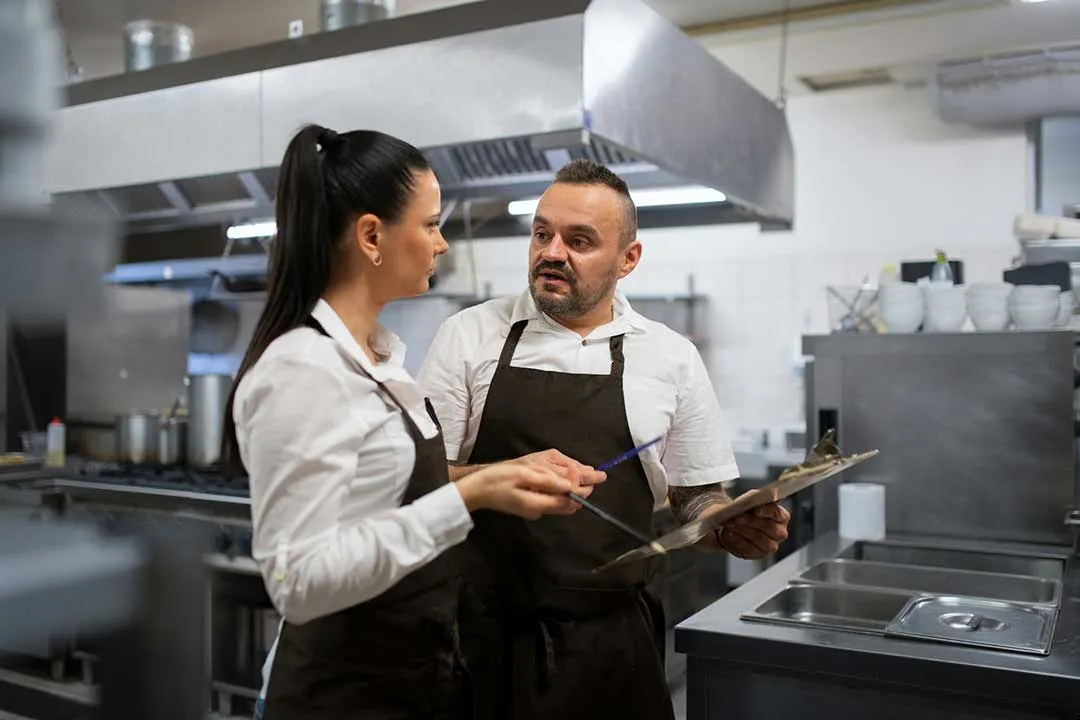
Kitchen staff need practical instruction on preparation, separation, storage, utensils, cleaning, and the points at which allergen risk enters a dish. Front-of-house staff need to know how to handle a guest declaration, what language is safe, what language is not, and when something must be escalated immediately rather than guessed at.
Managers need another level again. They need to understand the process, the legal duties, the response to incidents, and the discipline of keeping allergen information current.
If training does not reflect those different responsibilities, it is not proper training. It is just information being thrown at people.
This is one of those details worth getting right.
In kitchens, people often say ‘cross-contamination’ when they mean everything. Sometimes that is harmless shorthand. Sometimes it muddies the issue. Strictly speaking, cross-contamination is the broader food-safety term and is most often used for microbial risk, bacteria, viruses, and other forms of contamination passing from one surface, ingredient, or product to another.
Cross-contact is the more accurate term when you are talking specifically about allergens. It means allergen proteins are transferred unintentionally from one food, utensil, hand, cloth, board, fryer, pan, garnish station, or prep surface to another.
That distinction matters because allergens are not “cooked away” in the same way people sometimes imagine. A dish can be clean in the hygiene sense and still unsafe in the allergen sense.
So if you want sharper training, sharper thinking, and sharper communication, use the right term where it matters. Staff do not need a lecture on vocabulary, but they do need to understand that allergen transfer is its own risk and must be treated as such.
One thing years in kitchens teach you very quickly is that people do not behave under pressure the way they behave in a quiet briefing.
A waiter who can recite the process perfectly on a Tuesday afternoon may forget half of it on a packed Friday night. A chef who knows the spec in theory may still miss a substitution when the section is under pressure and tickets are stacked to the ceiling.
That is why scenario-based training is so useful. You rehearse the moment before it becomes real.
A guest mentions a severe peanut allergy while ordering. What happens next? Who checks the dish? Who confirms the garnish? Who speaks to the table? What if the head chef is off that day? What if the dish has been changed for service? What if the answer is uncertain?
Run those situations properly and you will see where the weak spots are. Usually they are not where management thought they were.
The most effective allergen training I have seen does not depend on one big annual session. It lives in the rhythm of the operation.
A short pre-service briefing that mentions menu changes. A handover that flags substituted ingredients. A manager who checks what a new team member actually understood. A kitchen where somebody can say “I’m not sure” without feeling they have just committed a crime.
That is what makes the difference.
Because the real danger is not always ignorance. Often it is bluff. A staff member who is afraid of looking foolish may guess rather than ask. That is not a personality defect. It is a management failure. If asking feels safer than guessing, people will ask. If speed and bravado are rewarded, people will bluff.
And bluffing is how trust gets broken.
Proper training is regular. It reflects the actual menu. It is tied to the actual site. It gives kitchen staff hands-on guidance; front-of-house staff safe language and escalation routes; and managers real ownership of the process.
It includes refreshers, briefings, drills, and practical examples. It makes someone clearly responsible for keeping allergen information current. It creates a culture where staff stop, check, and clarify rather than guess.
Most of all, it treats allergen discipline as part of professional standards, not an inconvenience to be endured.
That is the point many businesses still miss. Allergen training is not there to make the paperwork look tidy. It is there to make service safer, communication clearer, and the whole operation more reliable.
The old idea that allergen awareness can be handled with a yearly sign-off and a bit of common sense is finished. It was weak then, and it is indefensible now.
The kitchens that do this well are rarely good only at allergens. They are usually better run in general. Communication is better. Ownership is clearer. Discipline is stronger. Standards hold up under pressure. That is not a coincidence.
A kitchen that takes allergens seriously tends to take everything seriously.
A practical guide for kitchens that want to get this right
If this subject matters to you, and it should, then Safe Plates: Mastering Dietary Compliance goes into it properly.
The book covers legal frameworks across the EU, the UK, and the US, but more importantly it deals with the reality behind them: communication, training, systems, case studies, danger points, and the habits that make allergen control hold up in real service.
It is not written as theory for a shelf. It is written for people who actually have to run kitchens, train staff, and make safe decisions under pressure.
If you want a clearer, more practical grip on allergen management and dietary compliance, that is exactly what it is there for.
Read more about Safe Plates: Mastering Dietary Compliance and order your copy here.
Chef Ian McAndrew’s specialist eBooks and guides are available directly on ChefYesChef, including his technical titles and autobiography. If you want more practical, chef-led reading beyond this article, you’ll find the full collection here.
Chef Ian McAndrew works with chefs, businesses, and individuals on a wide range of culinary projects, from concept development to practical problem-solving.
If you’d like to talk through an idea or need informed guidance, you’re welcome to contact him.
Essential cookies required for the site to function. Cannot be disabled.
Cookies that help us understand how visitors use the site.
Cookies used to deliver relevant advertisements.
Privacy Policy Terms of Service