

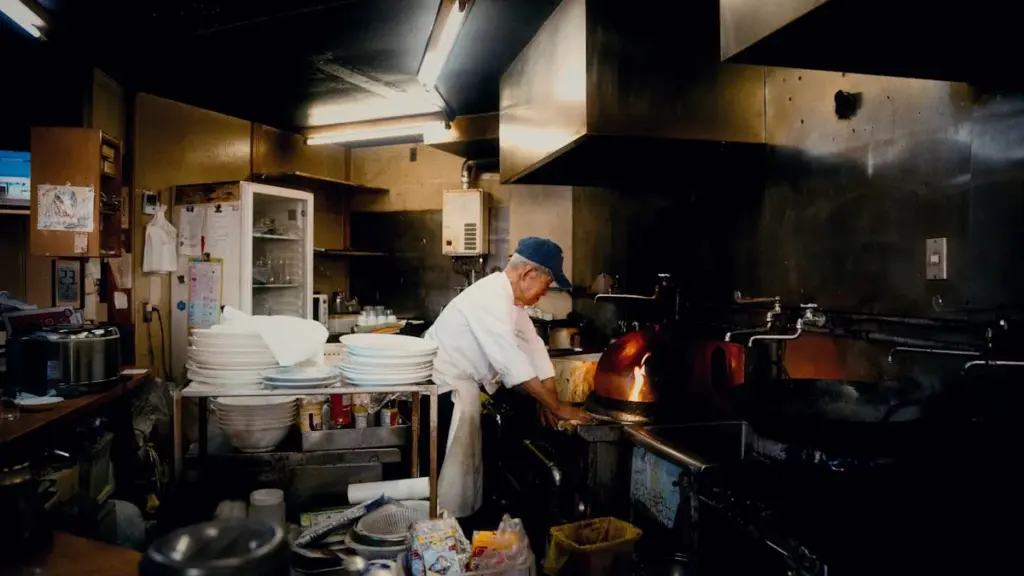
I once watched a sous chef throw a quenelle spoon across a kitchen because a waiter had brought back a plate of turbot for the third time, claiming the table found it “a bit fishy”. The turbot was perfect. The waiter was not. And the sous chef, brilliant as he was, spent the next twenty minutes in a fog of embarrassment and adrenaline, plating badly, snapping at commis, and generally making everyone around him worse at their jobs. The fish, incidentally, went out again and came back again. Some battles you cannot win with a spoon.
I tell that story not to mock him (though it is quite funny, even now) but because I recognise myself in it entirely. The kitchen is a place where pressure builds like steam in a sealed pot, and if you do not manage that pressure with some intelligence, things go wrong in ways that have nothing to do with the food. The burnt sauce, the over-reduced jus, the cheffy tantrum: most of it traces back not to bad technique but to bad emotional management. That is not a comfortable thing to admit if you have spent forty years telling yourself that heat, noise, and controlled fury are simply part of the craft.
But here we are. Older, slightly less spry, and considerably more interested in what the Stoics had to say than I ever expected to be.
Marcus Aurelius ran an empire. He also wrote, quietly and for no one but himself, that “you have power over your mind, not outside events.” Now, Marcus never worked a Saturday night in a two-hundred-cover restaurant with a broken salamander and a missing pastry chef. But the principle holds. What you cannot control, you cannot afford to spend your energy fighting. What you can control is how you respond to it.
The television version of kitchen culture has spent decades selling us the idea that explosive emotion equals passion, and that passion equals quality. I understand the appeal. I have felt genuine fury at a poorly prepared consommé. But rage, as a management tool, has roughly the same long-term effect as using a blender without the lid on. You will make a mess, you will regret it, and everyone nearby will end up wearing it.
Emotional intelligence in a professional kitchen is not about being soft. It is about being precise. It is about knowing the difference between the kind of high standards that lift a team and the kind of volatility that quietly destroys one.
A good head chef reads the service the way a good cook reads a piece of fish: you look at it, you smell it, you press it gently, and you make a judgement based on what you find rather than what you hoped for. That means paying attention to your team not just as a collection of tasks to be completed, but as people who are, at that particular moment, either coping or not coping.
The young chef on the grill who has gone quiet. The pastry section is running three minutes behind and starting to look hunted. The commis who is sweating more than the work warrants. These are signals. If you miss them because you are too busy performing your own version of professional intensity, you will pay for it in covers. You will also, if you are any kind of decent human being, feel bad about it later over a pint.
Learning to read the room is not mystical. It is simply the habit of looking up from your own station long enough to notice what is happening around you. Some chefs never develop it. They remain brilliant technicians and very difficult people to work for.
I am not going to suggest you sit cross-legged in the dry store and breathe through your feelings before service. But there are habits, formed over years of getting it wrong, that do genuinely help.
There is a reason that the best kitchens I have ever worked in had a particular kind of quiet energy during service. Not silent; there is still calling, confirming, the percussion of pans and timers and the odd expletive when something goes wrong with the tart case. But a controlled energy. Purposeful rather than panicked.
That environment does not happen by accident, and it certainly does not happen through fear. It happens because the person at the pass has made a decision, consciously or otherwise, to be the steadiest thing in the room. That is leadership in the only form that actually works: not loudness, not domination, but a kind of calm that is contagious in the best possible way.
Epictetus, who had considerably more reasons than most of us to be furious with life, wrote that we suffer not from events but from our judgements about them. A table sending back a perfectly good piece of turbot is annoying. It is not a catastrophe. The catastrophe is what you do next, and that, at least, is entirely within your control.
The chefs I respect most are not the ones who shouted the loudest or had the most dramatic services. They are the ones who built kitchens where people wanted to come to work, stayed for years, and cooked consistently well across thousands of covers without burning themselves out or burning anyone else in the process.
That kind of sustained excellence requires emotional intelligence as surely as it requires knife skills. You can train the knife skills in six months. The rest takes considerably longer, mostly because it requires you to be honest about yourself in ways that are not always flattering.
I still get cross about overcooked vegetables. I probably always will. But I have learnt, slowly and with a fair amount of embarrassing evidence to the contrary, that the best thing I can do with that feeling is turn it into a very clear, very calm instruction rather than a small kitchen drama. The vegetables improve. The atmosphere improves. The sous chef keeps the spoon. Everyone wins.
Chef Ian McAndrew’s specialist eBooks and guides are available directly on ChefYesChef, including his technical titles and autobiography. If you want more practical, chef-led reading beyond this article, you’ll find the full collection here.
Chef Ian McAndrew works with chefs, businesses, and individuals on a wide range of culinary projects, from concept development to practical problem-solving.
If you’d like to talk through an idea or need informed guidance, you’re welcome to contact him.
Essential cookies required for the site to function. Cannot be disabled.
Cookies that help us understand how visitors use the site.
Cookies used to deliver relevant advertisements.
Privacy Policy Terms of Service