


Every restaurant operates as two separate worlds. On one side of the pass, there’s urgency, charm, and the constant pressure of keeping guests happy. On the other, there’s precision, heat, and the relentless demand to execute perfectly under constraint. These two environments don’t just coexist—they collide constantly throughout service. And when they collide without intention, the relationship between the front and the back of the house becomes one of blame, resentment, and ultimately failure.
The problem is usually that one team does not respect the other. It’s that they don’t understand each other. They’re solving different problems with different pressures, using different languages, and measuring success by different metrics. A server thinks “fast” means getting the order through quickly. A chef thinks “fast” means getting it right. Neither is wrong. However, in the absence of a connecting framework, these two definitions will perpetually clash.
The communication breakdown that results isn’t just uncomfortable—it’s expensive. It shows up in slow service, in rushed plates, in guests who feel the tension, and ultimately in staff turnover. Both teams bleed people because nobody wants to work in an environment where they’re constantly blamed for problems they aren’t responsible for.
Building a better relationship between front of house and back of house requires more than noble intentions. It requires systems, clarity, and genuine effort to align two very different worlds toward a shared purpose.
Most kitchens have a pre-service brief. Usually, it’s management talking at people whilst they clock in. What it should be is an opportunity for FOH and BOH to actually talk to each other.
Before service, let’s bring both teams together in the same room. Front of house should hear what’s on or off, what’s running slow, and what the kitchen is nervous about. The back of house should hear what events are on the books, which tables are difficult, and what the guests are expecting. This isn’t a five-minute huddle. This is ten or fifteen minutes of genuine conversation.
When a server knows the kitchen is running two chefs short and doing covers manually because the system’s down, they behave differently under pressure. They don’t yell at the pass when tickets are slow. When a chef knows there’s a table of paying guests who’ve been waiting forty minutes and are visibly upset, they understand why that order needs to move now. Context changes behaviour. Most communication breakdowns happen because one side is solving their immediate problem without understanding the other side’s constraint.
Create Shared Metrics and Visibility
Here’s a hard truth: front of house and back of house are often measured on conflicting goals. FOH is measured on covers, turnover, and upsells. BOH is measured on food cost and execution. If the kitchen is penalised for waste but the pass is pushing volume, those two teams are literally incentivised to fail each other.
Put the same metrics in front of both teams. Show them ticket times. Show them customer feedback. Show them wastage. Show them covers and revenue. When everyone’s looking at the same numbers, they start solving problems together instead of blaming each other for them.
This needs to be visible—not buried in a report that nobody reads. A kitchen screen showing current ticket times. A pre-shift board showing the night’s targets. Information shared openly builds trust faster than any team-building exercise.
Build Empathy Through Role Shadowing
Most FOH staff have never worked a full service in the kitchen. Most BOH staff haven’t worked the pass during a Saturday night rush. That absence of understanding is where resentment lives.
Implement a simple rule: every FOH staff member shadows in the kitchen during prep at least monthly. Every BOH staff member works the pass or expo during a service shift monthly. Not as punishment. As education.
When a server understands how long it actually takes to brunoise a carrot, how many orders are happening simultaneously, and how thin the margin for error is—their behaviour changes. They stop treating the kitchen like an inconvenience. When a chef understands that a guest waiting forty-five minutes is genuinely upset, that a wrong order costs money and creates liability, and that some mistakes can’t be fixed with a remake—they stop treating FOH like idiots who don’t understand food.
This builds a relationship rooted in actual understanding, not assumption.
Create Clear Escalation Procedures
When something goes wrong during service, chaos usually follows. An order gets fired wrong. A guest complains. Instead of a clear process, there’s shouting, blame, and defensive posturing.
Create a simple, written escalation procedure that everyone knows. If an order is wrong, here’s how it gets communicated. If the kitchen is backed up, here’s how that information flows to FOH. If a guest is unhappy, here’s who handles it and how. When everyone knows the process, people don’t take problems personally—they solve them procedurally.
This also removes the emotion. It’s not “you messed up”; it’s “here’s the process we follow when this happens.” That distinction matters enormously for team cohesion.
Align Incentives So Both Teams Win Together
This is the structural piece that makes everything else stick. If bonuses or targets reward one team at the expense of the other, your relationship-building will always fail.
Structure compensation and targets so FOH and BOH both benefit from the same outcomes. Maybe that’s a shared bonus tied to customer satisfaction scores. Maybe it’s a target for covers at a specific revenue point, so speed matters, but quality can’t be sacrificed. Maybe it’s a reduction in wastage that benefits the business and rewards both teams for efficiency.
When the financial outcome is shared, so is the pressure. And shared pressure, managed well, builds genuine camaraderie.
The Bigger Picture
None of this works without leadership that models and enforces it. If management allows blame to flow freely, if inconsistencies in standards are tolerated, if one team is visibly favoured over the other, no system will fix the relationship.
Building a better relationship between front of house and back of house isn’t about making everyone friends. It’s about creating the conditions where two inherently different teams can respect each other’s work, understand each other’s constraints, and pull in the same direction. When that happens, service improves, turnover drops, and the whole operation becomes more resilient.
That’s worth the effort.
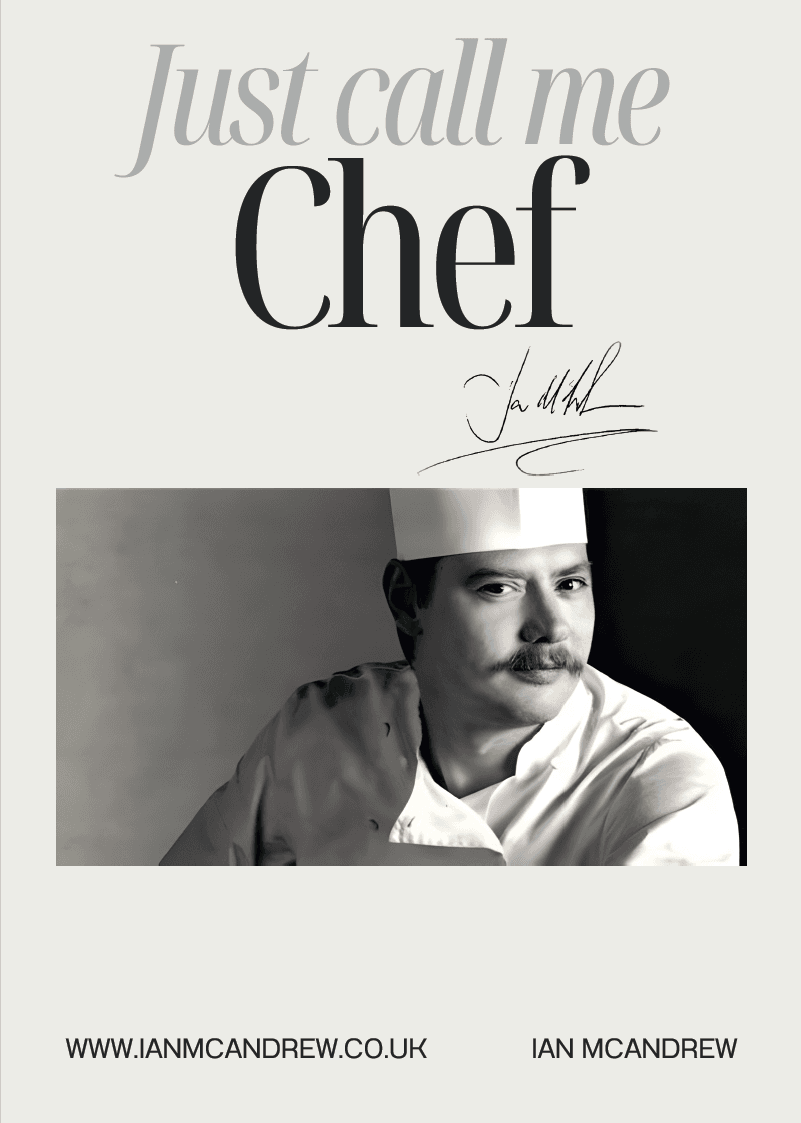
Chef Ian McAndrew’s specialist eBooks and guides are available directly on ChefYesChef, including his technical titles and autobiography. If you want more practical, chef-led reading beyond this article, you’ll find the full collection here.
Chef Ian McAndrew works with chefs, businesses, and individuals on a wide range of culinary projects, from concept development to practical problem-solving.
If you’d like to talk through an idea or need informed guidance, you’re welcome to contact him.
Essential cookies required for the site to function. Cannot be disabled.
Cookies that help us understand how visitors use the site.
Cookies used to deliver relevant advertisements.
Privacy Policy Terms of Service