

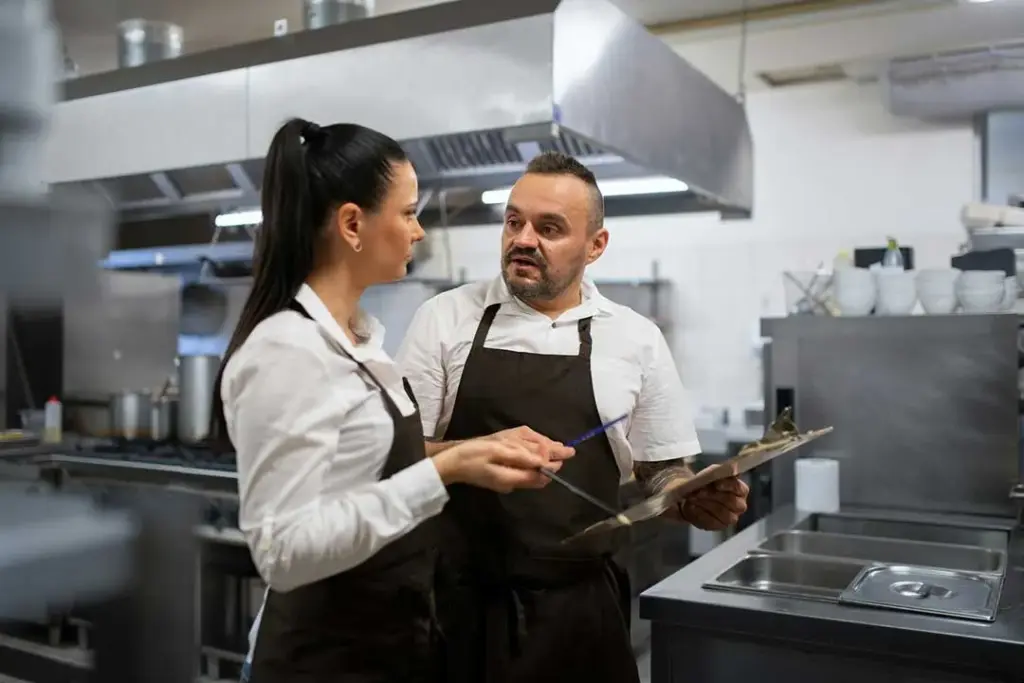
You’ve noticed it. The sections aren’t being held to standard. Prep is inconsistent. The team is picking up on a shift in energy, and service is starting to feel looser than it should. Your sous chef is the problem ; or at least, part of it. Now you need to have the conversation. Not a bollocking, not a vague “we need to talk” that festers for a week, but a proper performance conversation that actually moves things forward. This is one of the hardest things a head chef or kitchen owner has to do, and most get it wrong ; either by avoiding it too long or going in without a clear structure and making it worse.
Here’s how to do it properly.
Winging a performance chat with your sous chef is a mistake you’ll pay for. Before you sit down, you need specifics. Not feelings, not impressions ; actual examples. Dates, services, incidents. Was food cost running over target on their watch? Were covers suffering because mise en place wasn’t where it needed to be? Did a section fall apart during a busy Saturday because they weren’t managing the pass effectively? Write it down.
The more concrete your examples, the harder it is for the conversation to dissolve into defensiveness or denial. “Your attitude has been off lately” is a dead end. “On Thursday’s service, three tables came back with temperature issues, and you didn’t address it with the section chef” is something you can actually work with. You’re not building a case against them ; you’re creating a shared, factual starting point.
Also be clear in your own head about what outcome you want. Are you trying to get performance back on track? Agree on a development plan? Or are you beginning a formal process because things have gone beyond a quiet conversation? Know which one this is before you start, because it changes everything about how you approach it.
Don’t pull your sous chef aside five minutes before a busy service. Don’t do it in the middle of the kitchen where the brigade can see the body language and start drawing conclusions. And don’t do it when either of you is running on three hours’ sleep after a brutal double.
Find a quiet moment ; ideally mid-morning before prep kicks off, or on a day off if the situation warrants it. Sit down somewhere private. If you’re in a smaller operation without a proper office, a corner of the restaurant before it opens is fine. The point is that the environment signals this is a serious, respectful conversation ; not a public dressing-down and not something squeezed between tasks.
Keep it one-to-one. Unless HR or a formal disciplinary process is involved, bringing in a third party at this stage usually puts your sous chef on the defensive immediately. You want dialogue, not a tribunal.
Open by being direct about why you’re having the conversation. Don’t soften it so much that the message gets lost, but don’t come in swinging either. Something like: “I want to talk about how things have been going over the last few weeks. “I’ve got some specific concerns I want to go through with you, and I also want to hear your perspective.” That’s it. Simple and clear, and it signals that this is a two-way conversation.
Go through your examples calmly and specifically. Then ; and this is the part most head chefs skip ; actually listen. Your sous chef may be dealing with something you’re not aware of. There may be a gap in resources, a team dynamic issue, or a training need that’s contributing to the drop in performance. That doesn’t excuse the results, but it’s information you need if you’re going to fix the problem rather than just vent about it.
Avoid the words “always” and “never”. They’re rarely accurate, and they immediately make people defensive. Stick to what you’ve observed, when you observed it, and what the impact was on the kitchen’s performance ; on GP margin, on team morale, on the standard of food going out. Keep it grounded in the operation.
A performance conversation without a clear outcome is just a difficult chat that leaves everyone feeling worse. Before you finish, you need to agree on what changes, by when, and how you’ll both know if things are improving. Be specific. If the issue is food cost management, agree on a target and a review date. If it’s about how they’re running the pass, agree on what good looks like and check in after the next few services.
Write it down ; even informally. A quick follow-up message summarising what was discussed and what was agreed protects both of you and keeps things accountable. It also shows your sous chef that you’re taking this seriously enough to document it, which matters if the situation doesn’t improve and you need to escalate.
Make it clear that you want them to succeed in the role. If they’re worth having as your sous chef, this conversation should feel like an investment in getting them back to where they need to be ; not a precursor to moving them on. The best outcomes from these conversations are when the sous chef leaves feeling challenged but supported, with a clear picture of what’s expected and confidence that you’re in their corner if they step up.
If things don’t improve after a fair amount of time and genuine support, then you have a different conversation to have;and you’ll have the documentation to back it up.
The longer you leave a performance issue with a sous chef, the more expensive it gets ; in food cost, in team culture, and in your own stress. Your brigade takes its cues from the people directly below you. If standards are slipping at the sous chef level and nothing is being done about it, the message to the rest of the kitchen is that standards are optional.
If you’re running a kitchen and you know this conversation is overdue, the time to have it is now ; not after the next bad service, not after you’ve lost another good commis who got fed up. Get your examples together, find the right moment, and have the conversation like the professional you are.
If you want support building performance frameworks, kitchen management structures, or team development processes that actually work in a professional kitchen environment, get in touch. Real kitchens need real solutions ; not generic HR templates.
Chef Ian McAndrew’s specialist eBooks and guides are available directly on ChefYesChef, including his technical titles and autobiography. If you want more practical, chef-led reading beyond this article, you’ll find the full collection here.
Chef Ian McAndrew works with chefs, businesses, and individuals on a wide range of culinary projects, from concept development to practical problem-solving.
If you’d like to talk through an idea or need informed guidance, you’re welcome to contact him.
Essential cookies required for the site to function. Cannot be disabled.
Cookies that help us understand how visitors use the site.
Cookies used to deliver relevant advertisements.
Privacy Policy Terms of Service