

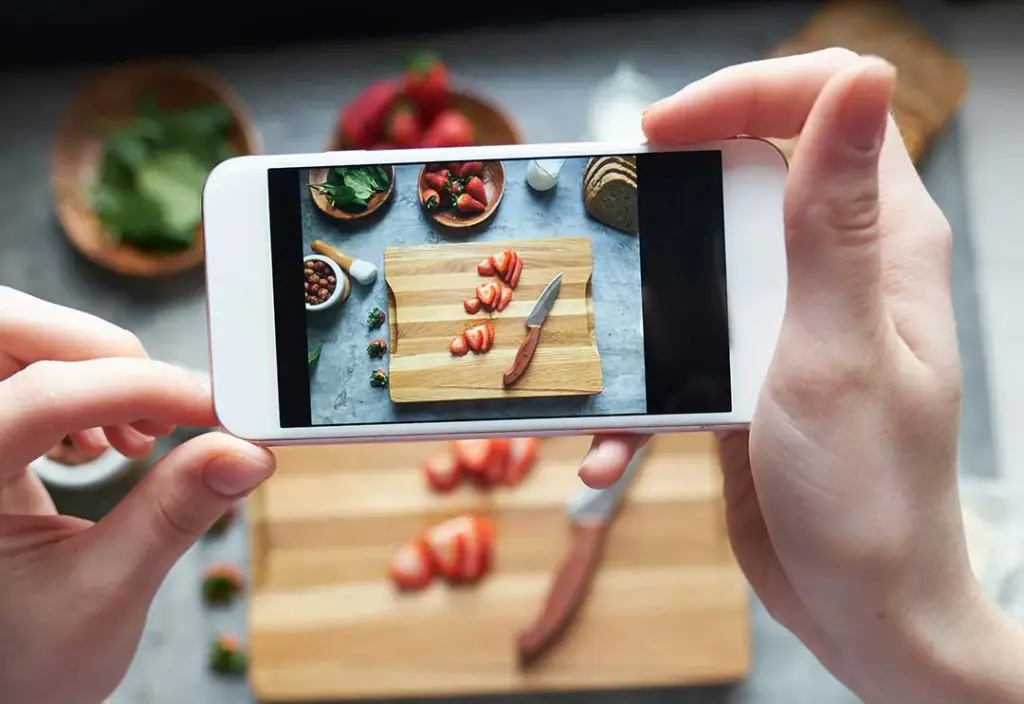
There’s a moment in every decent kitchen, usually around half ten in the morning, just after the stocks have gone on and before the first delivery goes wrong – where something genuinely interesting happens. A sauce reduces unexpectedly well. A new spice combination clicks. You taste something and think, ‘Right, that’s it. ‘ Then service swallows you whole, and by Thursday you can’t remember what you did. Sound familiar? Good. You’re a chef, not an archivist. But here’s the thing: that’s starting to cost you.
I’m not talking about keeping a notebook for nostalgia’s sake. I’m talking about building content capture into your prep and R&D routine in a way that actually serves the food and, if you’re running any kind of public-facing kitchen or food business, serves your audience too. This isn’t about becoming a content creator. It’s about not letting your best work disappear into the bin with the carrot tops.
Every serious kitchen I’ve worked in ran on a kind of informal R&D. You’d tinker with a dish on a quiet Tuesday, adjust the acidity, try a different fat, and argue with the sous chef about whether the garnish was necessary (it wasn’t). The knowledge lived in your hands and your palate, passed along through repetition and the occasional bollocking when someone forgot the ratio. Brilliant, in many ways. Fragile, in others.
The problem is that most of that knowledge evaporates. The recipe you wrote on the back of an order pad in 2009. The technique you adapted from watching an older cook work a fish. The ferment that went wrong but produced something extraordinary by accident. Gone. Or at best, lodged somewhere in your muscle memory and utterly impossible to teach to anyone else without standing next to them for six months.
Capturing it doesn’t mean turning your kitchen into a film set. It means building small, consistent habits that document the work while the work is actually happening.
Forget the word “content” for a moment; I know it makes some of us twitch. Think of it instead as institutional memory. Every time you develop a new dish, adjust a classic, or stumble onto something worth repeating, there’s information worth preserving. A photo of the plated result. A voice note with your immediate reaction. A quick handwritten entry in a prep diary. None of it needs to be polished. It just needs to exist.
The point is to capture it during the process, not retrospectively. Because retrospectively, it’s either idealised or forgotten. When I’m working through a new dish – say, figuring out how to use the last of the autumn celeriac before it turns – I find it enormously useful to note down not just what I did, but what I was thinking. Why I chose to roast rather than braise. Why I reached for walnut oil instead of butter. These aren’t insights for a recipe book. They’re the reasoning behind the craft, and that reasoning is exactly what gets lost.
The trick is integration, not addition. Nobody has time for another task. But you do have time to take a photograph before you adjust a sauce. You do have time to mutter thirty seconds of observation into your phone after a tasting. The captures are small. The habit is the hard bit.
Here’s how I think about it across different parts of the kitchen day:
There’s a particular value to this kind of documentation when you cook seasonally, which, if you’re doing it properly, means your menu shifts meaningfully at least four times a year and probably more. That means you’re continuously developing, continuously adapting. And if you don’t record what worked last March with purple sprouting broccoli, you’ll spend part of next March reinventing it from scratch. (I’ve done this. Multiple times. It’s maddening.)
A well-kept prep diary from the previous year is worth more than any cookbook when you’re staring down a delivery of something you haven’t cooked since last spring. Not because it tells you exactly what to do, but because it reminds you what you were thinking, what the produce was like, and what clicked. That’s a form of culinary intelligence that no external resource can replicate.
Some of you are running kitchens with a public face: a supper club, a cookery school, or a food account that people actually follow. In that case, your prep and R&D documentation has a second life. The image you took of an imperfect but beautiful braised chicory. The voice note you recorded about why you prefer dry-ageing at home to buying pre-aged from the butcher. These aren’t performative. They’re the unguarded truth of the work, and that’s precisely why they resonate.
People are not short of polished recipe content. They’re drowning in it. What they’re short of is the honest, unglamorous middle bit: the thinking, the adjusting, the ‘this didn’t work, so I tried that instead’. Your prep diary is full of that. And if you’ve been capturing it consistently, you have material worth sharing without having to manufacture anything.
The key is that the capture serves the cooking first. It’s documentation in service of craft. Anything that ends up being useful for an audience is a by-product of that, not the aim of it. The moment it becomes the other way round, the moment you start cooking for the camera rather than for the plate, the food suffers. And the audience, if they have any palate at all, will notice.
You don’t need special equipment. Your phone takes adequate photographs. A small Moleskine or even a wodge of folded paper in your apron pocket will do for notes. The format matters far less than the consistency. Five minutes of honest documentation per development session, done daily, compounds into something genuinely valuable within a few months.
Review it occasionally. Once a month, sit down with a coffee and flick back through what you’ve noted. You’ll be surprised what patterns emerge: which techniques you return to without realising, which seasonal combinations you keep reaching for, and where your instincts are taking you. This is how a cooking style develops, and it’s how you start to articulate it to other people without resorting to vague words like “rustic” and “honest” (which tell us precisely nothing).
The food we cook is perishable by design. The knowledge behind it doesn’t have to be. Write it down while it’s still warm.
Chef Ian McAndrew’s specialist eBooks and guides are available directly on ChefYesChef, including his technical titles and autobiography. If you want more practical, chef-led reading beyond this article, you’ll find the full collection here.
Chef Ian McAndrew works with chefs, businesses, and individuals on a wide range of culinary projects, from concept development to practical problem-solving.
If you’d like to talk through an idea or need informed guidance, you’re welcome to contact him.
Essential cookies required for the site to function. Cannot be disabled.
Cookies that help us understand how visitors use the site.
Cookies used to deliver relevant advertisements.
Privacy Policy Terms of Service