

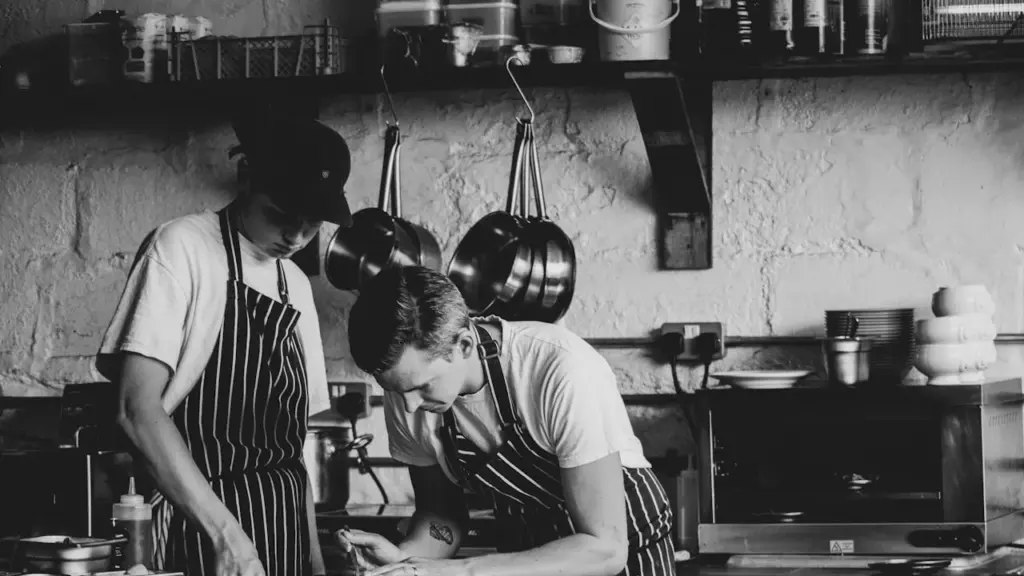
I once watched a senior chef reduce a nineteen-year-old commis to tears over a brunoise that was, frankly, perfectly acceptable. Not perfect, mind you, but acceptable. The boy had been on shift for eleven hours, his hands were shaking, and the chef in question stood over him and said things I will not repeat here. The rest of us stared at our boards. Nobody said a word. I have thought about that moment, and my silence in it, more times than I can count.
If you are a sous chef reading this, you already know what I am talking about. You have seen it. Maybe you have been on the receiving end of it yourself, back when you were coming up. The question is not whether kitchen bullying exists. The question is what you actually do when you see it happening, in real time, on a busy service, when everything is loud and hot and the chef patron is watching the pass.
This is not a seminar. I am not going to talk about organisational culture frameworks or restorative practice models. I am going to tell you what works, because I have tried most of it, got some of it wrong, and eventually got some of it right.
There is a distinction between hard standards and harassment, and it matters. A chef shouting “that plate is not good enough, do it again” is not bullying. A chef repeatedly targeting one person, humiliating them in front of the brigade, mocking their background, or using physical intimidation is something else entirely. The line is not always obvious in the moment, particularly if you grew up in kitchens where the second category was treated as normal. It was not normal. It was just common.
As a sous chef, your job is to read the room. Watch for patterns rather than single incidents. Is one person consistently singled out? Are the corrections punitive rather than instructive? Is the tone personal rather than professional? If the answer to those questions is yes, you are not watching high standards. You are watching someone abuse their position.
The hardest part of intervening is that it rarely feels like the right time. Service is running, covers are piling up, and the last thing you want is to create a scene. But here is the thing: a scene is already happening. You are just choosing whether to be part of it or not.
Some approaches that actually work, without turning the kitchen into a drama:
This is where it gets complicated. If the bullying is coming from the head chef or the chef patron, your options narrow considerably, and pretending otherwise would be dishonest. You have less power than you would like. That is the reality of the hierarchy, and it does not change simply because the behaviour is wrong.
That said, you are not without any options. Document what you see: dates, times, what was said, who was present. Not because you are building a legal case (though you might need to eventually), but because it forces you to be precise, and precision is useful when you do decide to escalate. It also helps you distinguish a bad week from a genuine pattern.
Speak to the person being targeted, again privately, and ask whether they want your support in raising it formally. Do not assume they want to be rescued. Some people do. Some people are managing the situation in ways you cannot see, and they will tell you that too, if you ask rather than assume.
If you genuinely believe someone is at risk, your obligation is clear: escalate, whether that means the general manager, the HR function, or in extreme cases, the relevant external body. Staying silent to protect your own position is a choice, and it is not a neutral one. I say that as someone who stayed silent once and has regretted it since.
The sous chef role is, in many ways, a rehearsal for running your own kitchen. The habits you form now, the things you tolerate and the things you refuse to, will shape what you build when you have the keys. And the truth is, the best kitchens I have worked in were not the quietest ones, or the least demanding ones. They were the ones where the pressure was real but it was never personal. Where you could be told you had got something wrong without feeling like you were being dismantled as a human being.
That takes active effort. It does not happen by accident simply because you are a decent person. You have to model it deliberately: how you give feedback, how you respond when service goes badly, how you treat the most junior person on the section when you are under pressure yourself.
Kitchens are stressful by nature. Heat, speed, precision, repetition: it is a demanding environment, and that is not going to change. But stress is not the same as cruelty, and demanding is not the same as demeaning. The distinction is worth keeping clear, especially when you are tired and the covers are backing up and someone has just sent back a dish.
The nineteen-year-old from my story, by the way, is now running a very good kitchen in the north of England. He got there despite that chef, not because of him. I would like to think someone standing up a bit sooner might have made the journey slightly less grim. Worth remembering, the next time you are standing at your board and something starts happening that you know is wrong.
Chef Ian McAndrew’s specialist eBooks and guides are available directly on ChefYesChef, including his technical titles and autobiography. If you want more practical, chef-led reading beyond this article, you’ll find the full collection here.
Chef Ian McAndrew works with chefs, businesses, and individuals on a wide range of culinary projects, from concept development to practical problem-solving.
If you’d like to talk through an idea or need informed guidance, you’re welcome to contact him.
Essential cookies required for the site to function. Cannot be disabled.
Cookies that help us understand how visitors use the site.
Cookies used to deliver relevant advertisements.
Privacy Policy Terms of Service