

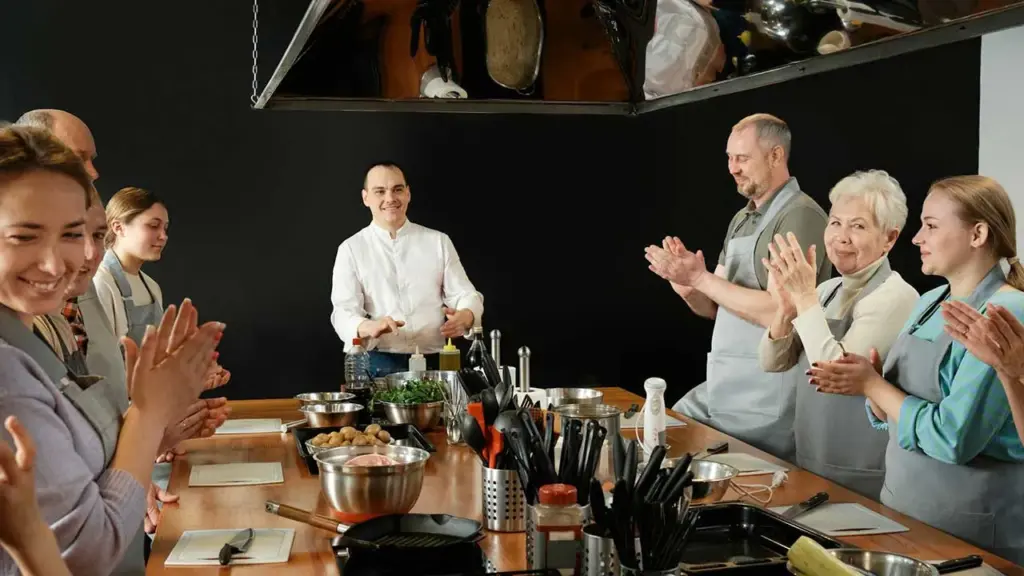
There is a moment, about twenty minutes before service, when a kitchen can go one of two ways. Either it hums, quietly, purposefully, everyone knowing exactly what they are about, or it frays at the edges before a single cover has walked through the door. I have stood in both versions of that kitchen. The second one is significantly less fun, and I speak as someone who once ran a service during a gas leak and a broken chiller on the same Tuesday evening in February.
The difference, more often than not, comes down to fifteen minutes. Not the food. Not the linen. Not whether the sommelier has remembered to decant the Barolo. It comes down to whether the team actually knows what they are doing that evening and whether anyone has taken the time to tell them before the chaos begins.
I should be honest here. I have conducted terrible briefings myself. There was a period in my early head chef years when “briefing” meant shouting the specials whilst simultaneously wiping down the pass and arguing with the fish supplier on the phone. The commis chefs would stand there nodding, absorbing approximately none of it, and then go and describe the halibut dish to a table as “some fish with stuff on it”. “You learn, eventually.
The worst briefings I have witnessed, and I have witnessed many – share the same qualities. They are rushed. They are one-directional. Someone talks, nobody listens, and the whole thing is done in ninety seconds because the head chef is already mentally on the pass. Nothing lands. And then service unravels in exactly the ways it could have been prevented.
A proper briefing is not a formality. It is not a box-tick or a ritual performed out of habit. It is the single best investment of time you will make before the doors open.
Here is the thing about fifteen minutes: it is enough time if you use it properly. You do not need longer. You need focus, and you need everyone in the room actually present: phones away, whites on, listening. This is non-negotiable. I once worked with a sous chef who would start every briefing with a full thirty seconds of silence. Theatrical? Slightly. Effective? Absolutely. People stopped fidgeting by about second ten.
The briefing should cover five things, and five things only. Not twelve. Not a full debrief on last night’s errors (that has its own time and place). Five things, clearly communicated, and then you move.
If you are introducing a special, the team should taste it. Not metaphorically. Actually taste it, with a spoon, before service. I am aware this is not always logistically simple. It is also entirely non-negotiable if you want your team to sell the dish with any conviction whatsoever.
A server who has tasted the mushroom velouté and noticed that it has a faint smokiness and needs a moment to settle in the bowl will describe it differently – better and more honestly – than one who has read a typed sheet and is doing their best. Guests are not stupid. They can tell when enthusiasm is genuine and when it is rehearsed patter. Tasting creates genuine enthusiasm. It also occasionally catches a seasoning error before it reaches the dining room, which is a bonus.
A briefing where only the head chef or manager speaks is half a briefing. The floor team has information the kitchen needs. They have spoken to regulars, fielded questions, and noticed patterns. Give them thirty seconds to share anything relevant. Is there a known difficult table coming in? Has a regular mentioned they no longer eat shellfish? Is there something about last week’s service that needs flagging upwards rather than just sideways?
This does not turn the briefing into an open forum. It remains structured and led. But it signals to the team that their observations have value, and frankly, they do. Some of the most useful pieces of pre-service intelligence I have ever received came from a nineteen-year-old commis waiter who had noticed something I had missed entirely.
End the briefing cleanly. Not with a rallying cry; we are not in an American sports film, but with a clear, calm signal that this is done and service is beginning. Some chefs say thank you. Some simply make eye contact and nod. What you do not do is let it trail off into side conversations and someone checking the rota while someone else asks about the staff meal.
Fifteen minutes, well spent, creates a kind of collective readiness that you can actually feel in a room. Everyone knows what they are doing. Everyone has tasted the food. Everyone understands the priorities. The service that follows is not necessarily easier; kitchens are kitchens, and something will always go sideways, but it is managed better, and the team recover faster when they do.
I have cooked in places where briefings were considered unnecessary faff, and I have cooked in places where they were treated as seriously as the menu itself. The difference in service quality was not subtle. Fifteen minutes is not a luxury. It is the quietest, most effective thing you will do all evening, and it costs nothing except the willingness to actually do it properly.
Chef Ian McAndrew’s specialist eBooks and guides are available directly on ChefYesChef, including his technical titles and autobiography. If you want more practical, chef-led reading beyond this article, you’ll find the full collection here.
Chef Ian McAndrew works with chefs, businesses, and individuals on a wide range of culinary projects, from concept development to practical problem-solving.
If you’d like to talk through an idea or need informed guidance, you’re welcome to contact him.
Essential cookies required for the site to function. Cannot be disabled.
Cookies that help us understand how visitors use the site.
Cookies used to deliver relevant advertisements.
Privacy Policy Terms of Service