

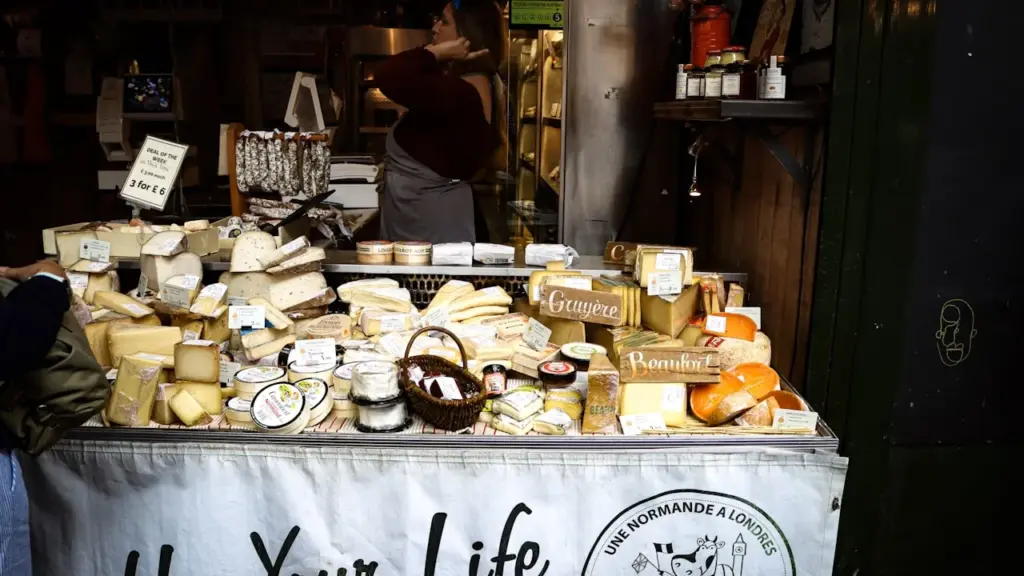
I once spent twenty minutes talking to a cheesemaker in the Dales about the particular patch of pasture his herd grazed in autumn. Twenty minutes. Standing in the cold, getting mud on my good boots. My sous chef thought I’d lost the plot. But that conversation ended up on the menu, and people talked about that cheese for months.
That’s the thing nobody tells you when you’re sweating over a hot stove and worrying about covers. The story behind the ingredient is half the dish. Possibly more. People eat with their ears as much as their mouths, and if you can give them something to hold onto before the first bite, you’ve already done a great deal of the work.
Sustainable sourcing gets talked about in very worthy, slightly exhausting terms these days. Carbon footprints. Certifications. Supply chain transparency. All important, yes. But somewhere along the way, the actual human story gets buried under the jargon, and that’s a shame. Because the story is the good bit.
Every decent kitchen I’ve ever worked in had a list of suppliers stuck somewhere near the pass. Phone numbers, order days, minimum quantities. Purely functional. But behind every name on that list there’s a person who gets up before most of us do, who worries about weather and soil and feed costs, who has probably been doing this longer than we’ve been cooking.
When you go and meet that person, everything changes. You stop ordering ingredients and start sourcing food. There’s a difference, and it shows on the plate. You also, rather usefully for our purposes here, come back with material. Genuine, specific, interesting material that no amount of copywriting can manufacture.
The fisherman who still goes out twice a week on a small boat out of Brixham. The market gardener who’s been growing the same heritage courgette variety since the eighties because nothing else has the flavour. The family butcher who dry-ages his beef for thirty-five days and gets slightly tetchy if you ask him to rush it. These are characters. Put them on your menu, your website, and your social media, and suddenly you’re not just selling lunch. You’re telling people something true.
Here’s where I’ll be blunt. A lot of what passes for supplier storytelling in the food industry is, to put it charitably, embellished. Vague references to “local farmers” with no names attached. Stock photography of someone who has clearly never milked a cow in their life. A paragraph about “artisan methods” that was written by someone in an office three hundred miles from the nearest field.
Diners are not stupid. They’ve been sold this sort of thing for years, and they’re getting better at sniffing it out. The moment your sourcing story starts to feel like marketing rather than truth, you’ve lost them. Worse, if someone asks your front-of-house team a specific question about the farm and gets a blank look in return, the whole thing unravels.
The only version of this that works is the real one. Go and visit. Know the names. Understand the method. Be able to explain, in plain English, why this particular producer is worth the premium you’re charging for their product. If you can’t do that, you’re not ready to tell the story yet.
Right, let’s get practical. You’ve built the relationships. You know your suppliers, you’ve walked their land, and you’ve tasted the difference. How do you actually communicate that without sounding like a press release?
Saying you source sustainably is not enough. People have heard it so many times the word has lost most of its meaning. What you need to do is explain what that actually looks like in your kitchen, in the specific relationships you’ve built.
Does it mean buying whole animals because your butcher raises cattle slowly and you respect the fact that a loin chop is not the whole story? Does it mean accepting imperfect vegetables because your grower doesn’t use chemicals and the parsnips are occasionally a bit odd-shaped? Does it mean paying more than the going rate because you want certain producers to still be there in ten years?
All of that is concrete and communicable. It gives people something real to consider rather than another abstract environmental claim. And if it costs you a bit more, which it probably does, the story is part of how you justify that to the customer without being preachy about it.
None of this works as a short-term tactic. Building genuine supplier relationships takes time, and communicating with them honestly takes consistency. There’s no quick version. But the restaurants and food businesses that do it properly, that really know where their food comes from and can talk about it with authority and warmth, tend to hold their customers in a way that no amount of advertising can replicate.
People come back because they trust you. They trust that the lamb on the plate lived a decent life, that the person who raised it knows your name, and that the price reflects something real. That trust is worth more than any loyalty scheme or promotional offer you could dream up.
The cheesemaker in the Dales, by the way, is still supplying us. His cheese is still on the menu. His name is still there beside it, and people still ask about him. Twenty minutes in the cold. Entirely worth it.
Chef Ian McAndrew’s specialist eBooks and guides are available directly on ChefYesChef, including his technical titles and autobiography. If you want more practical, chef-led reading beyond this article, you’ll find the full collection here.
Chef Ian McAndrew works with chefs, businesses, and individuals on a wide range of culinary projects, from concept development to practical problem-solving.
If you’d like to talk through an idea or need informed guidance, you’re welcome to contact him.
Essential cookies required for the site to function. Cannot be disabled.
Cookies that help us understand how visitors use the site.
Cookies used to deliver relevant advertisements.
Privacy Policy Terms of Service