

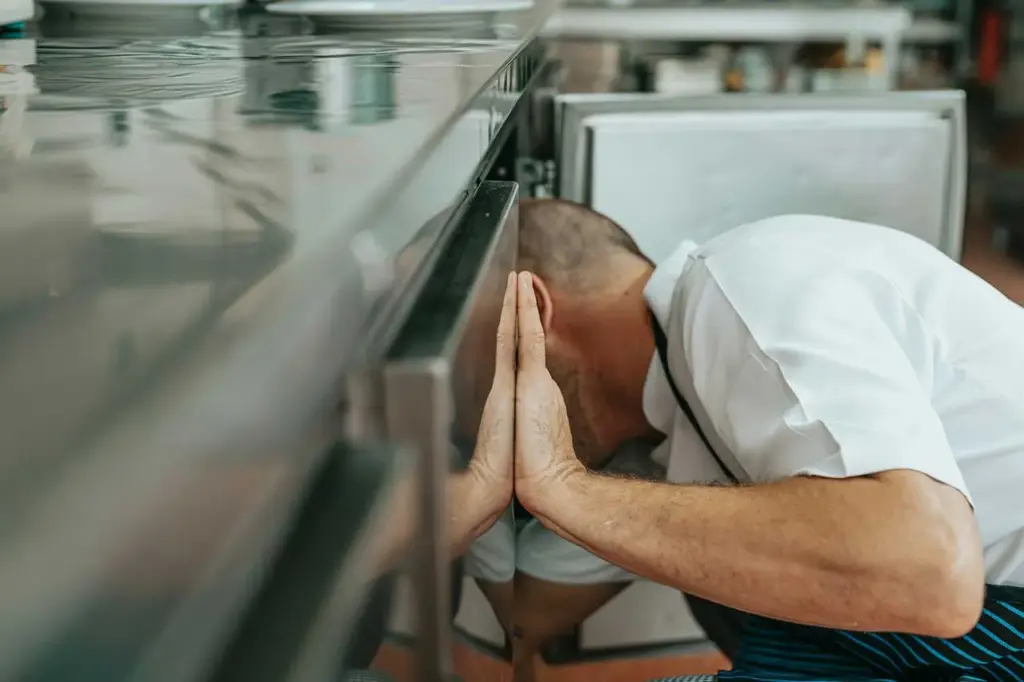
I once had a delivery driver turn up at half six on a Friday evening; peak service, forty covers already seated, three more tables walking in as I watched; with the wrong fish. Not slightly wrong. Completely wrong. I’d ordered turbot. He handed me a box of frozen pollock with a cheerful shrug and a clipboard to sign. The sous chef looked at me. I looked at the menu. The menu looked back at me, unhelpfully.
What saved us wasn’t panic. It was the quiet, unglamorous fact that we had a plan already in place for exactly that sort of catastrophe. Not written down on a laminated sheet somewhere (although that’s not a terrible idea), but drilled into the team through habit, conversation, and the occasional near-disaster that we’d learned from the hard way. Crisis protocols. Boring name. Absolutely essential thing.
Every head chef thinks they’re good under pressure until the pressure actually arrives. Then you find out what you’re actually made of and, more importantly, what your kitchen is made of. So here’s what I’ve learned, across too many years and too many service disasters, about the protocols worth having before you ever need them.
Every menu has weak points. Dishes that depend on one key ingredient, preparations that take forty minutes and can’t be rushed, and components that need to be made to order and will collapse the moment a table of eight all order them simultaneously. You need to know what those are before a Friday service teaches you in the worst possible way.
Walk through your menu the way a sceptic would. Ask yourself: if this ingredient doesn’t arrive, what do I do? If this dish gets triple-sat, how does that affect the rest of the pass? The answers to those questions are your fault lines. Map them out, even mentally, and then have a quiet word with your senior team about them before service, not during it.
The best head chefs I’ve worked with had what I’d call shadow menus in their heads ; a parallel set of options they could pivot to without the dining room ever noticing a thing. That’s not pessimism. That’s experience dressed up as calm.
Your main supplier will let you down. Not out of malice ; usually ; but because supply chains are fragile things, and weather, transport, seasonality, and sheer human error all conspire against your mise en place on a regular basis. Having a secondary supplier for your critical ingredients is not a luxury. It’s basic operational hygiene.
Keep a running list of at least two suppliers for proteins, dairy, and anything seasonal that you depend on heavily. Make sure someone in the kitchen actually has their contact numbers saved and knows how to place an emergency order. This sounds obvious. You’d be amazed how many kitchens don’t do it.
Also worth having: a short list of local shops, farm shops, or markets within reasonable distance where you can fill gaps at short notice. A good relationship with your local butcher has saved more than one restaurant from a service catastrophe, and it’ll save yours too if you’ve bothered to build it before you need it.
Someone will call in sick at the worst possible moment. Someone will quit without notice the week before Christmas. A key commis will slice a finger badly enough that they’re off for a fortnight. All of these things will happen to you, and the kitchen has to keep running anyway.
The protocol here has two parts. First, cross-train your team properly. Everyone in a section should understand at least one other section well enough to cover it in an emergency. This isn’t just about crisis management ; it makes better cooks, full stop. Second, maintain a short list of trusted freelance or agency chefs you’ve actually worked with before, not cold contacts you’d be meeting for the first time in the middle of a crisis.
Calling an agency in a panic and getting someone you’ve never met, at a station they’ve never worked, during a busy service is a gamble at best. If you can, trial agency chefs during quieter periods so you know what you’re getting before you ever need to rely on them.
The oven goes down. The blast chiller stops blasting. The induction hob decides it would rather not today, thank you very much. Equipment fails, and it nearly always fails at the worst time (because there is no good time, but kitchens have a particular talent for finding the absolute worst one).
Have your engineers’ emergency contact numbers somewhere obvious and accessible ; not buried in a folder in the office, but on the wall near the relevant equipment. Know your kitchen’s workarounds: which dishes can be finished over gas if the induction goes, which components can be held differently if the blast chiller is out, and whether you can reduce the menu temporarily rather than struggle through with compromised kit.
And know when to call it. There are services where the right call is to reduce covers, simplify the menu, or, in extreme cases, close the kitchen. Making that call early ; before a compromised service damages your reputation ; is leadership. Making it late is just damage control.
A kitchen in crisis is loud, hot, and stressful. It is also precisely the moment when communication tends to break down into shouting, assumption, and very creative swearing (I speak from experience on all three counts). This is why communication protocols ; simple, practised ones ; matter more under pressure than at any other time.
Establish clear lines: who reports what to whom, who has authority to make which decisions, and how information moves from the pass to the sections and back again. In a normal service this runs on habit. In a crisis, it needs to run on structure, because habit gets disrupted the moment things go sideways.
Brief your team before service on anything that’s already uncertain ; short supplies, missing ingredients, a reduced team. Five minutes of honest briefing before service prevents twenty minutes of chaos during it. Every time.
When a crisis is over, the temptation is to pour yourself something restorative and never speak of it again. I understand this impulse entirely. But the kitchens that actually improve are the ones that sit down ; calmly, not accusatorially ; and talk through what happened, what worked, what didn’t, and what they’d do differently.
This doesn’t need to be a lengthy affair. Fifteen minutes the following morning, when the adrenaline has settled and nobody’s exhausted, is enough. Ask three questions: what caused this, what did we do well, and what do we need to change? Then actually change the thing. Write it down if you have to.
The best protocols aren’t written in advance by someone with a clipboard. They’re built gradually, from real experience, by teams that are honest enough with each other to learn from what goes wrong. That’s the work. That’s always been the work.
A kitchen that has never faced a crisis and survived it together is a kitchen that hasn’t been tested yet. The protocols you build before the chaos arrives are the difference between a team that holds and a team that fragments ; and that difference, on a hard Saturday night, is everything.
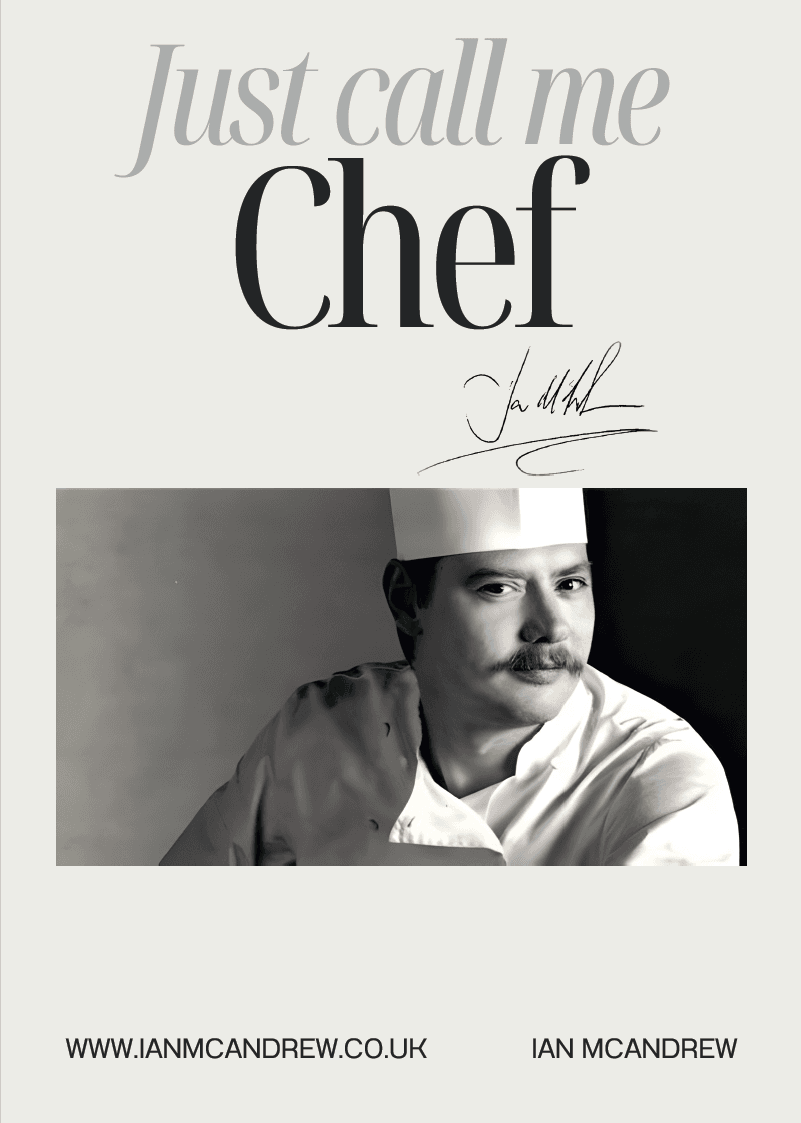
Chef Ian McAndrew’s specialist eBooks and guides are available directly on ChefYesChef, including his technical titles and autobiography. If you want more practical, chef-led reading beyond this article, you’ll find the full collection here.
Chef Ian McAndrew works with chefs, businesses, and individuals on a wide range of culinary projects, from concept development to practical problem-solving.
If you’d like to talk through an idea or need informed guidance, you’re welcome to contact him.
Essential cookies required for the site to function. Cannot be disabled.
Cookies that help us understand how visitors use the site.
Cookies used to deliver relevant advertisements.
Privacy Policy Terms of Service